Know 4 social media analytics tips to supercharge your marketing efforts; What’s the best way to know where and how your social media marketing efforts succeed or fail?
While social media platforms can give you a wealth of data about your audience and content, so it’s not always easy to cut through the noise and focus on what’s important in your marketing efforts.
The solution? Social media analytics.
Using the best social media analytics tools and gathering and analyzing your social data can help you track and gain valuable insights into your content and overall campaign performance.
We got you covered with these four social media analytics tips to help you optimize your social media marketing initiatives.
1 – Establish benchmarks
Defining social media marketing success can be challenging, especially when launching a digital marketing agency or new online store.
After all, you could meet all your social media marketing targets, but if you don’t outperform competitors, your success won’t be enough to sustain your efforts.
The key is to establish social media benchmarks.
Benchmarking allows you to compare your social media marketing performance to your direct competitors, industry standards, and historical performance.
You can get a good picture of social media marketing success.
It can also help you identify the metrics to assess and understand your current performance, including predicting your future performance and making the right adjustments for improvement.
Use reliable tools such as Vista Social.
The platform offers modern social media marketing features, including reporting; and analytics tools to quickly determine what works (and what doesn’t) with your efforts.
You’ll get an intuitive and easy-to-use interface to customize, and fully automate your reports by scheduling them to auto-generate at your preferred dates and times.
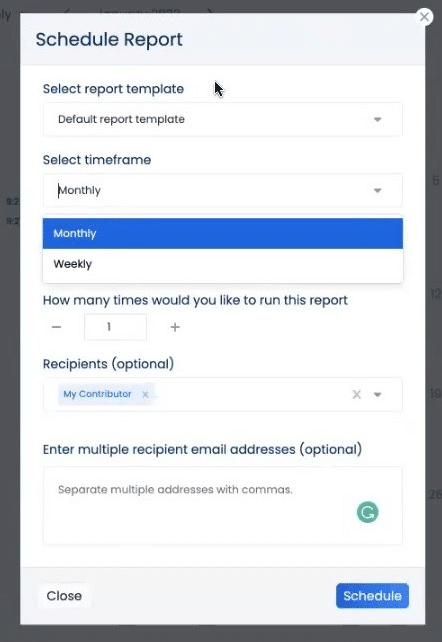
You’ll quickly gain actionable insights that you can use for benchmarking, allowing you to maintain complete oversight over your social media content performance and activities.
You can also leverage the insights to develop guidelines and tips for your existing content creation process, such as best practices for writing excellent content.
2 – Make small but crucial adjustments
Don’t underestimate the impact minor tweaks on your social media marketing strategies can have on your overall results.
Start with easy wins—social media activities and initiatives that can require minimum effort but have a massive impact.
Look at your data to see where you can make tiny yet meaningful adjustments.
For instance, changing your posting frequency, dates, and times or reducing the number of hashtags you include in your posts can significantly raise your brand’s exposure and engagement opportunities.
If you use robust customer engagement platforms, leverage the platform’s engagement analytics features to analyze and understand your customer and social media audiences’ data.
The tools allow you to create action plans to improve your content, interactions, brand, and products and, in turn, boost customer satisfaction.
Small tweaks can yield significant returns for your social media marketing efforts when done properly.
3 – Leverage social media platform built-in tools
Besides using advanced social media analytics platforms and other reliable e-commerce marketing tools, leverage built-in analytics features within social networks.
For example, Instagram Insights offers analytics features (available for business accounts and mobile apps).
The Instagram feature can help you know more about trends across your followers, including your content’s performance among your audiences.

You’ll get valuable social media information, including the following.
- Content data. The feature can tell you the number of people who viewed your Stories and posts, including your posting frequency. Knowing which content draws in people and performs best can help you focus your efforts on the content types that spark your audiences’ interest and drive engagement.
- Audience insights. Instagram’s audience analytics can tell you relevant follower data, such as their location, gender, and age, including your follower growth. You’ll know when your followers are active on IG; which helps you optimize your posting schedule and refine your audience engagement efforts.
- Activity information. Instagram Insights can show you the number of visits to your profile, the number of profiles your posts reach, impressions, interactions, and the number of post views. You’ll also see the number of people who saved your posts.
Consider using the native social media platform analytics features to support your content tracking processes. The tools can also help you assess your social media marketing performance seamlessly.
4 – Focus on metrics that matter most
You can’t track and measure all social media marketing metrics you can think of, or you’ll drain your resources and waste time without getting meaningful results.
Focus on tracking and analyzing the metrics that matter most to your social media marketing efforts.
Your metrics can also vary depending on your goals, social media platforms, and analytics tools.
Start with these common, all-encompassing metrics that most social media marketers monitor and measure.
- Engagement rate. This refers to all audience interactions with your social media content, such as your shared tips on how to buy SEO articles. Your engagement rate includes the total likes, shares, and comments.
- Reach. This is the number of people who viewed your content.
- Mentions. The times when social media users and other brands reference your brand and business are known as mentions.
- Social Return on Investment. The social ROI gives you insights into the returns you get from your social media marketing investment. For example, increased (or decreased) customers, brand awareness, customer loyalty, and sales indicate your ROI.
Start with these metrics and include more as you go along.
One effective approach to finding the right metrics to track and measure is to consider the data that can help your social media marketing efforts generate money. These metrics can include the number of conversions, leads, ad spend, etc.
5. Turn social media analytics insights into audience-first content decisions: Marketing efforts
Tracking social media metrics is only valuable if you use the data to create better content. The strongest social media strategies do not stop at measuring engagement. They use analytics to understand what your audience actually finds helpful, relevant, and worth sharing.
For example, if your posts with step by step advice, real examples, or practical solutions consistently drive more saves, comments, and shares, that is a strong signal that your audience values useful content over promotional messaging. In that case, your next move should be to create more content around those formats and topics.
This approach can also help you improve your overall content quality. When you notice that certain posts attract more thoughtful engagement, you can use that information to refine your blog articles, landing pages, videos, and email campaigns. Instead of guessing what your audience wants, you are using direct behavioral signals to guide your content strategy.
The key is to focus on content patterns, not just isolated wins. Look for recurring themes in your top performing posts. Which topics attract the most clicks? Which formats generate the longest engagement? Which posts lead to profile visits, shares, or conversations? These insights can help you produce content that feels more relevant and credible to your audience.
Over time, this makes your marketing stronger because your content becomes more aligned with real user interests. It also helps you build trust by publishing material based on proven audience needs instead of assumptions.
Social media analytics should not only help you measure performance. They should help you create content that is more useful, more targeted, and more likely to support long term growth.
Optimize your social media marketing with analytics
Social media analytics isn’t always easy as pie, but nailing it can supercharge your existing and future campaigns and workflows.
You’ll seamlessly gain actionable social media insights, equipping you to make informed, data-based, and strategic decisions and drive your expected results.
Set benchmarks, make essential adjustments to your current strategies, and use reliable analytics tools. Also, track and measure the metrics that help determine your social media marketing efforts’ performance and success.