AI in marketing, the power of automated ad creatives; The rise of artificial intelligence (AI) tools is impacting all areas of marketing at the moment, and for a good reason. Marketers can focus on other things by offloading work to machine learning algorithms.
Automated ad generation is one of the most impactful applications of AI in marketing. Let’s explore how this works and why it matters.
Know the power of automated ad creatives
The basics
Marketing pros spend hours kicking around ideas for ads. This can be time-consuming and mentally draining. However, you can also find yourself struggling for inspiration and retreading the same ground with new campaigns.
Pencil, one of the more established platforms in this category, generates and edits static images, video, and ad copy from a brand’s existing assets and brief, then scores each output’s predicted performance before any media spend, drawing on a dataset built from over a billion dollars in historical ad spend. Founded in 2018 and acquired by The Brandtech Group in 2023, it’s used by brands including Samsung, Unilever, and L’Oréal, and was named a Fast Company Most Innovative Company in 2024, a recognition worth checking through independently verified reviews rather than the vendor’s own claims alone. Its more recent integration of Google’s Veo models extends this into higher-fidelity video generation directly inside the same workflow.
It isn’t the only option. Meta’s Advantage+ Creative and Google’s Performance Max both build AI-driven creative generation directly into their native ad platforms, automatically producing and testing variations within campaigns already running there, a meaningfully different approach than a standalone platform like Pencil, since the optimization happens inside the same system placing the ads rather than as a separate pre-launch step. For platform-specific execution once a creative approach is chosen, Visualmodo’s TikTok Ads guide covers exactly this kind of platform-native setup in more depth than fits here, and the broader shift this reflects is part of the same trend covered in how generative AI is reshaping visibility beyond just ad creative.
Which approach fits better depends on whether a team wants creative generation integrated directly into an existing ad platform, or a standalone tool that can feed multiple platforms and gives more direct control over the brand assets and prompts driving generation.
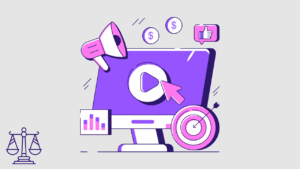
All sorts of parameters alter the output, such as your target audience and the offers you’re promoting. The automated ads can be static images and powerful video ads complete with text and audio elements.
In short, you can rapidly conjure fresh concepts for ads tailored to your needs. And because you’re using assets you already own, it won’t cost the earth either.
The benefits
We’ve discussed being able to generate ad ideas in batches, but what about other applications of automated ad creatives?
Well, with modern tools, you’ll also be able to test ad performance and predict the impact a campaign will have.
Let’s say you’ve got an idea for an ad that you want to run with. Rather than going all-in on a campaign, an AI tool will estimate its likely effectiveness early on.
The upshot is that you can sift out ideas that won’t work sooner rather than later. Also, you will find hidden gems that will have the best chance of succeeding.
The cherry on the cake is that automated ad creatives will get better every time you use them. This is how machine learning works; the more data you feed, the more successful the outcomes.
Being able to generate and test ads quickly is great. However, having the opportunity to do so at volume is even more appealing. That’s what AI-based software brings to the table.
How predictive scoring actually works, and what’s worth asking before trusting it
The predictive scoring feature this article references, estimating an ad’s likely effectiveness before it runs, depends entirely on the historical performance data the model was trained on. A platform’s prediction is only as reliable as how closely that historical dataset resembles your specific audience, industry, and ad platform. Before trusting a predicted score over your own judgment, it’s worth asking a vendor directly what historical data the model draws from, whether that data reflects your specific industry or a broad general average, and what the platform’s own accuracy has been when predictions are checked against real, subsequent campaign results, not just cited in the abstract.
It’s also worth confirming who owns the output. Some platforms explicitly guarantee that a brand’s uploaded assets and generated creative are never used to train the platform’s broader models and that generated output belongs entirely to the client; this varies by vendor and by plan tier, and it’s a reasonable, specific question to ask before uploading proprietary brand assets rather than assuming it by default. Strong creative is also only half the equation, pairing it with better placement strategy is what actually determines whether a well-tested ad reaches the audience it was built for.
The considerations
So, must consider the cost-saving potential if you aren’t sold on automated ad tools. Of course, using an AI platform isn’t free, but it’s worth the expense when you come back.
Say you have a small team that spends several days each month dreaming up ads. Turning this process over to an algorithm will let them put their energy into other tasks. Moving forward, you will see productivity levels rise and job satisfaction increase as well.
You might assume that language would be a barrier to AI tools. The good news is that although English is usually supported, speedy translation is a breeze. So whatever your marketing aims, machine learning is here to help.
The bottom line on AI in marketing
Using automated ad creatives can transform your marketing output in more ways than one. The power of these tools will grow with time, and things like security and privacy are also guaranteed.
Don’t think that AI will remove the need for human marketing teams. For the moment, people are still needed to make the most out of these tools.
By working side by side with AI services, marketers can fully use their creative powers. Small brands and large businesses benefit equally from this state of affairs.
Now is the time to check out AI in marketing. The chances are good that your competitors are doing the same thing!
AI ad creative FAQ
Results vary by platform and use case, but the core value most teams report isn’t necessarily that any single AI-generated ad outperforms a human-made one, it’s the ability to produce and test far more variations far faster than a manual creative process allows, which increases the odds of finding a genuinely strong performer sooner.
This depends on the specific vendor and plan. Some platforms explicitly state that generated output belongs entirely to the client and that uploaded brand assets are never used to train the platform’s broader models; others have less explicit terms. Confirming this directly before uploading proprietary brand assets is a reasonable step, not an unusual request.
Platforms offering this feature generate a performance prediction based on historical ad spend data rather than a guarantee. The reliability of that prediction depends on how closely the training data matches your specific industry and audience, which is worth asking a vendor about directly rather than treating any predicted score as certain.
A standalone tool like Pencil generates and tests creative independently of any single ad platform, giving more control over brand assets and the ability to feed multiple platforms from one source. Native platform tools generate and test variations directly within campaigns already running on that specific platform, which is more integrated but tied to that one platform’s ecosystem.
Infographic