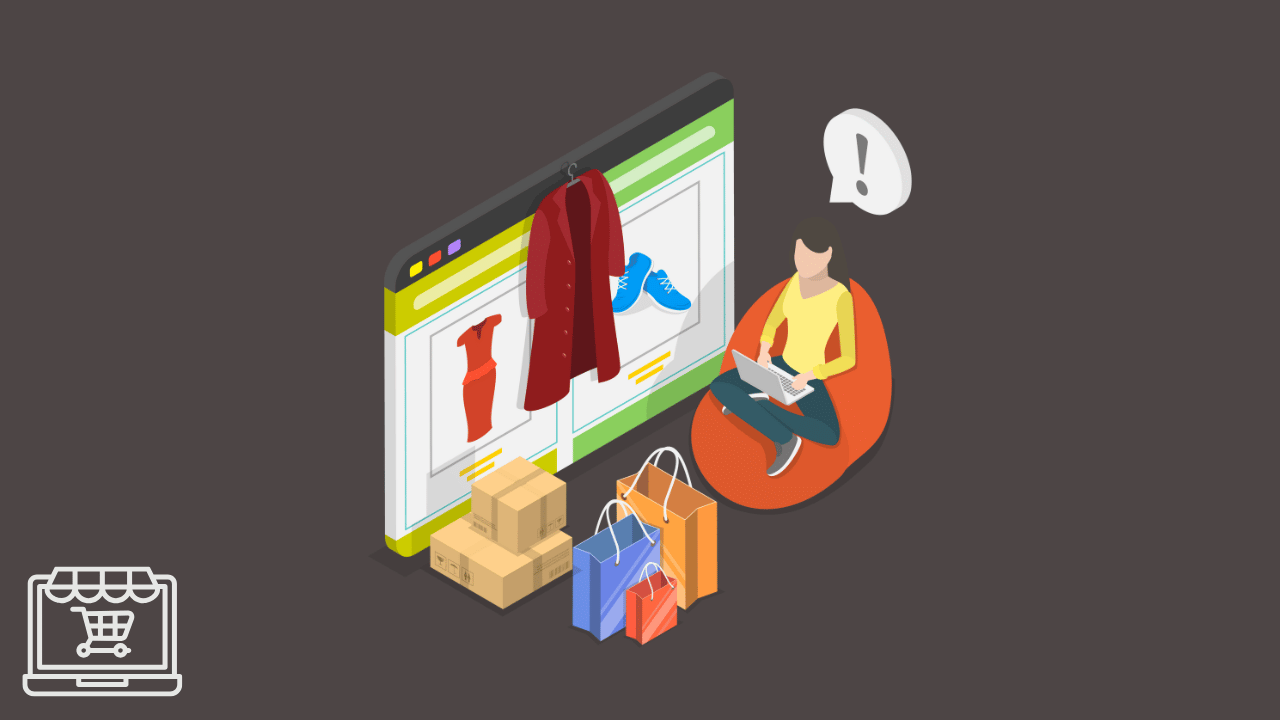
Five years from now, the fashion eCommerce Web Development Company will be more than simply selling clothes online; it will be about the whole experience, smarts, speed, and values. When digital storefronts used to be the only channel, now they have turned into immersive, data-driven ecosystems in which consumers want personalization, sustainability, and instant gratification in equal amounts. In this article we’ll explore the fashion ecommerce in 2026, top trends, stats and brands to watch.
Brands that do not change are already behind the times as worldwide fashion consumers get more conscious, tech-oriented, and community-focused. This blog dives into the main trends in fashion e-commerce in 2026 along with some crucial industry statistics and fashion brands that are remodeling the online fashion future without the fluff.
Fashion E-commerce Sector in 2026
Fashion is still the leading category of global e-commerce and is witnessing an unabated steady growth in 2026 notwithstanding economic variations.
Important Industry Stats (2026) Fashion Ecommerce Trends
- Fashion e-commerce generates more than 30% of total global e-commerce revenue
- Almost 75% of fashion purchases are done via mobile shopping
- More than 60% of buying decisions are guided by AI-driven product recommendations
- More than half of Gen Z shoppers expect brands to show tangible sustainability measures
- Returns still hover around 20 25%, which is why brands are seriously considering better sizing and try-on technology
The data points illustrate the fact that convenience alone does not satisfy the shopper anymore. They seek smarter and ethically guided fashion experiences besides just being fashionable.
Top Fashion Ecommerce Trends in 2026
1. AI-Driven Hyper-Personalization
By 2026, personalization is no no more just about “recommended products.”
- AI today figures out:
- webpage navigation habits
- body dimensions
- weather conditions and positions
- changes in fashion style preferences
- social behavior on several platforms
Customers get to see for instance, on-the-fly-changing homepages, exclusive selections based on their profile, and even AI-assembled ensemble ideas that match with their habits. Those who only offer standard shopping experiences are sidelined very fast.
2. Virtual Try-Ons and Trusted Fit: Fashion Ecommerce Stats
The problem of apparel fitting, which was one of the most demanding issues of fashion e-commerce, has been resolved significantly in 2026.
- AR virtual try-on technologies have become a norm
- 3D body scanning technology tightens the size-fit connection
- “Real fit” indices wipe out uncertainty
- Intelligent mirrors and camera-based fitting stations are compatible with smartphone applications
Consequently, a brand experiences fewer product returns and more sales conversions, especially if the product line is denim, lingerie, or footwear.
3. Social Commerce Takes Over: Fashion Ecommerce Trends
Shopping in 2026 is mostly influenced by social media platforms.
Consumers are purchasing from:
- Facebook Stories
- Live shopping broadcasts
- Pages run and curated from creators
- Community-initiated product launches
The divide between content and commerce is virtually nonexistent. Fashion brands have moved from retailers only to being media platforms as well.
4. Green Means Get All the Way
Consumers are no longer buying what is touted by greenwashing.
They want:
- clean and open supply chains
- fair wages to workers
- Materials that are recycled and/or biodegradable
- Fashion options that go in a circle (resale, repair, rental)
In 2026, corporate activities that cannot be demonstrated clearly in terms of their ecological impact will find it toughest to gain the trust of the crowd. This situation will be especially so with the younger consumers.
5. Speedier Order Processing, More Reliable Logistics
- Fast fashion is now fast fulfillment with a touch of responsibility.
- Same/next-day delivery is a culture in big cities
- Inventory overstocking is reduced by AI-assisted demand forecasting
- Delivery distances are shortened by neighborhood stock
- Returns backed by smart systems improve reverse logistics
- Time is still of the essence, only that more emphasis is now on the effectiveness side.
Buyer Behavior Shifts in 2026: Fashion Ecommerce Trends
- Fashion shoppers nowadays are:
- Less loyal to brands but more loyal to values
- Comfortable purchasing premium items via the internet
- Highly influenced by the creators and reviews of peers
- Ready to spend more for clarity & quality
While the trend of impulse buying still exists, this time it is driven more by feelings, identity, and storytelling, rather than just discount offers.
Fashion Ecommerce Brands to Watch
Zara
Zara is still a leader in its field by combining quick designer cycles with enhanced sustainability measures and AI-based sales forecasting. The firm’s e-commerce plan is based on an uninterrupted omnichannel shopping experience, which enables customers to go online and offline with ease.
Nike Fashion Ecommerce Brands to Watch
Nike’s DTC approach acts as a benchmark. By means of extensive personalization, special app-only product releases, and fitness-data-based suggestions, Nike has scaled e-commerce beyond a mere store to a whole brand ecosystem.
Shein
Shein, which has experienced its number of controversies, still serves as a model of data-led production for the fashion industry. Its instant trend monitoring and super-fast design-to-market system set are continuously molding the market; however, the demands for enhanced transparency and sustainability are getting louder.
H&M Fashion Ecommerce Brands to Watch
By making a move to embrace circular fashion, partnering with resale platforms, and launching conscious collections, H&M is a heritage label that is not only aware of but also adequately responding to the requests of the fresh e-commerce environment.
Emerging DTC Fashion Brands
On top of it all, 2026 will be the time of localized, community-first DTC fashion brands:
- Plus-size labels
- Unisex garment lines
- Fashion inspired by local cultures
- Wardrobe on subscription basis
Through genuine storytelling, collaboration with creators, and cultivation of loyal communities, these brands find their way to success without the help of mass advertising.
Technology Powering Fashion Ecommerce in 2026
Several technologies behind the scenes help to propel this transformation:
- AI & Machine Learning for more accurate forecasting and client-focused personalization
- AR & VR for more authentic and captivating shopping experiences
- Blockchain to guarantee transparency in supply chain
- Headless commerce architectures for rapid and scalable delivery of products
- Composable ecommerce stacks for easy assembling of functionalities
Those brands that put their money into modular, forward-looking tech stacks will be able to change more rapidly than those that are tied to inflexible platforms.
Challenges the Industry Still Faces
Even though the sector is innovative, fashion e-commerce is still:
- Experiencing financial burden due to high-volume returns
- Making environmental protection compromises
- Consumer acquisition costs going up
- Information security policies
- Digital ad overflow
Being a winner in 2026 means not doing everything but simply focusing on doing certain things really well.
What the Future Holds Beyond 2026
Among the upcoming things, you can expect:
- AI-generated fashion designs customized to each user’s tastes
- Digital fashion to be used by avatars and virtual worlds
- Wardrobe subscription services gradually taking over the concept of owning clothes
- Stronger congruence of brick-and-mortar and e-commerce
- Tighter control over sustainability statements
Fashion e-commerce simply won’t stop transforming in these two ways: transactional to relational and product selling to identity creation.
Fashion Ecommerce Stats & Final Thoughts
The Fashion e-commerce in 2026 will be smart, multi-sensory, and focused. The brands that will prevail are those that know their customers well, are tech-savvy, and combine profit with purpose.
It won’t be the loudest brands that get the future but the most relevant, transparent, and adaptable ones.
The former is all about self-expression, while the latter is about showing values, uniqueness, and connection but on a grand scale.