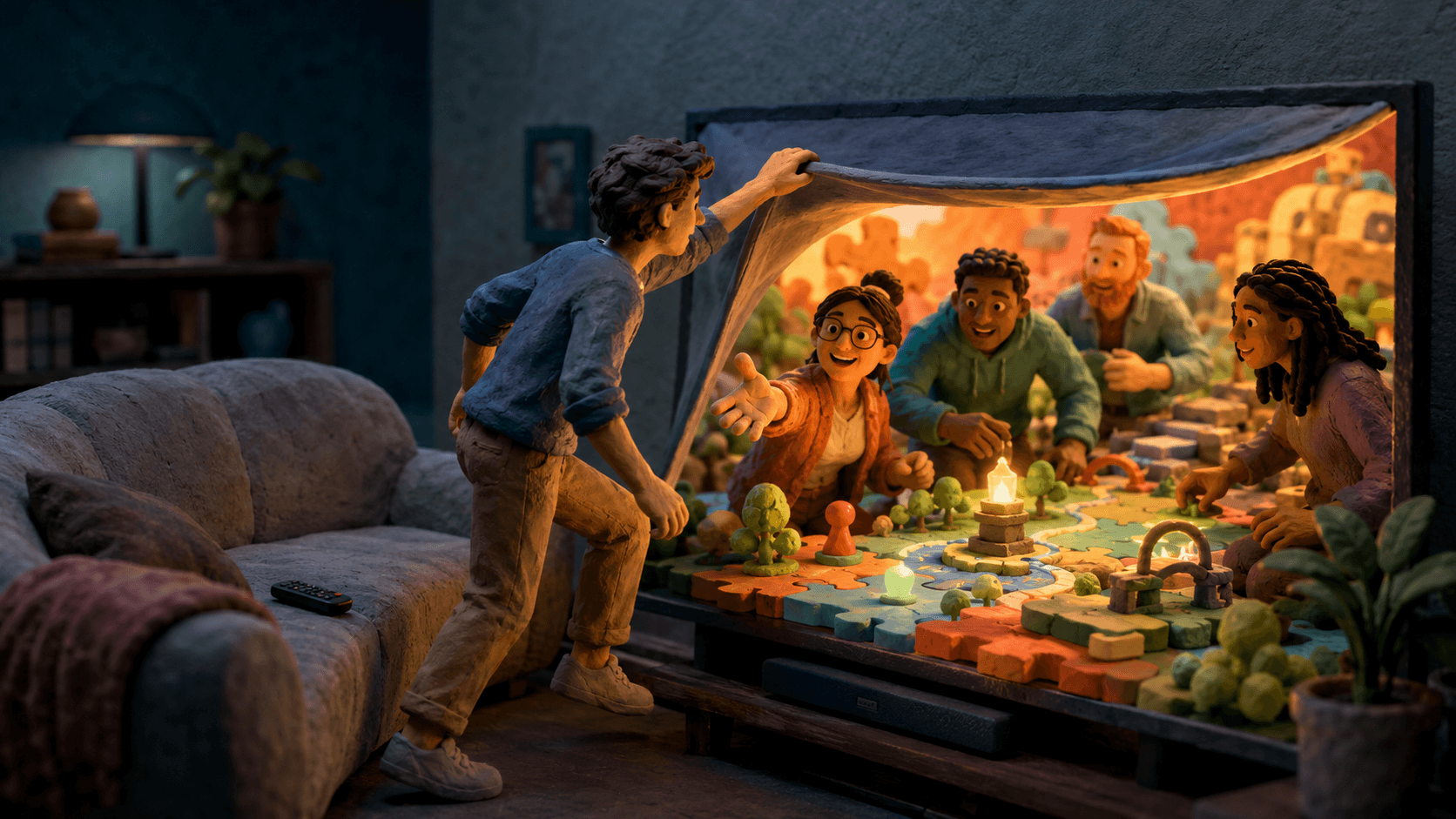
Picture two people on the same couch. One has a show autoplaying in the background while scrolling, half-registering what’s on. The other is fully absorbed in a game, present in the moment because the next move depends on them. Same room, same hour of downtime, two completely different evenings.
That contrast has a name now. Streaming fatigue is the growing sense that an hour of watching costs the same as an hour of playing but returns less, and it shows up in the data as clearly as it does on the couch. Streaming itself is not shrinking. Nielsen’s Gauge put streaming at 48.6% of total US TV watch-time in May 2026, the highest share it has ever recorded. What is shrinking is streaming’s claim on attention that has somewhere else to go. Deloitte’s Digital Media Trends survey finds that around 90% of Gen Z now identify as gamers, spending roughly eight hours a week playing, while more than half of Gen Z and millennial subscribers cancel at least one streaming service every six months.
Both things are true at once. Streaming is winning the television screen and losing the evening. Below, we look at what drove the shift, what the research actually says about active versus passive downtime, and what it means for anyone building things people are supposed to want to engage with.
Key takeaways
- Streaming hit a record 48.6% of US TV watch-time in May 2026. It is not shrinking.
- Around 90% of Gen Z identify as gamers, at roughly eight hours per week, and over half cancel a streaming service every six months.
- Flow research finds passive viewing produces satisfaction far less reliably than absorbed, challenging activity.
- Short-session formats win the small windows that streaming’s 45-minute unit cannot fill.
- The design lesson: close the loop inside the window the user actually has.
What the Streaming Fatigue Numbers Actually Show
The tempting version of this story is that gaming is eating streaming’s lunch. The measured version is more specific and more useful.
On TV, streaming keeps growing. It hit a record 48.6% of total US viewing in May 2026 and held 48.5% in June, while cable slid to 19.5%. Nielsen also groups gaming into an unmeasured “other” category rather than treating it as a rival platform, so the widely shared idea of a direct share battle between the two on that chart isn’t supported.
The pressure shows up somewhere else: in retention and in relative time. Deloitte’s survey work puts SVOD churn above 50% for Gen Z and millennials, the same cohorts most likely to be gamers. Roughly 90% of Gen Z call themselves gamers, and gamer hours have stayed flat at about eight per week for several years while streaming subscriptions have been canceled, resumed, and canceled again around them.
Read together, those numbers describe a substitution at the margin rather than a collapse. Streaming keeps the default slot. It just stopped keeping every slot, and the hours it loses are going to formats that ask for something back.
Passivity Started Falling Flat
Streaming was supposed to save time because you didn’t need to go to a theater to watch a movie. Lately, streaming just fills the hours. Autoplay and endless catalogs made choosing something to watch effortless, and for a while, effortless felt like a win. But easy isn’t the same as satisfying. Every platform runs the same scroll-and-select loop now, so one show blends into the next, and picking something starts to feel like another item on a to-do list instead of a break from one.
The research lines up with the feeling, and it predates streaming by decades. Mihaly Csikszentmihalyi’s work on flow, summarized well by Harvard Health, found that people report their highest satisfaction when they are fully absorbed in something that matches their skill against a real challenge, and that people who experience flow more often are generally happier over time. His experience-sampling studies produced a result that still surprises people: flow shows up more often at work than during passive leisure like watching television, a pattern researchers call the paradox of work. A show can run its full length and leave barely a trace. No scene worth remembering, no sense of having done anything. That is the gap driving people elsewhere.
Streaming didn’t get worse, exactly, but it just stopped being enough on its own. Not because the shows got worse, either. The catalogs are bigger than ever, and the production quality is higher. The problem was never the content; it was the posture people ended up in while consuming it, half-present, one eye on a second screen, absorbing without retaining much of anything.
Interaction Began Winning Attention
Gaming is where most of the reclaimed attention has gone. It has not displaced streaming on the TV screen, as the share numbers make clear, but it competes for the same downtime and increasingly wins the discretionary part of it, simply because a game demands attention in a way a paused show never will. Look away during a boss fight and the round ends. That’s exactly the kind of stakes that keep someone present instead of half-watching with a phone in hand.
Even smaller, more casual game formats carry the same pull: a trivia night, a quiz app between meetings, a puzzle slowly pieced together between chores. It’s a different rhythm than a board game with friends, but the trade is the same: doing something instead of watching it unfold.
Session Length Turned Out to Matter More Than Format
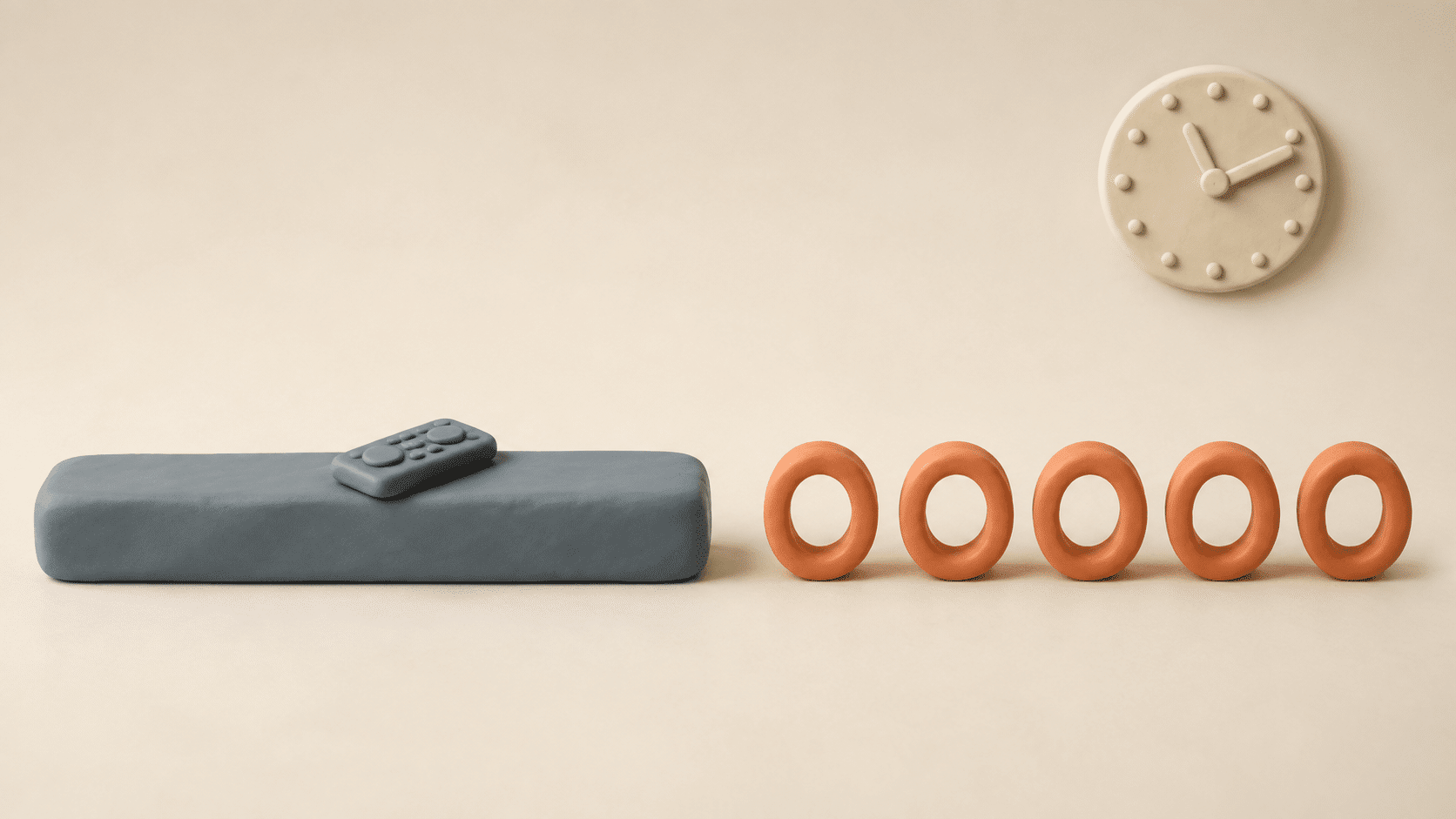
One underrated reason interactive formats keep winning the small hours is that they fit them. Streaming’s basic unit is 45 minutes or two hours. That unit is fine for a Saturday and useless for the ten minutes before dinner, which is exactly the window where autoplay and endless scrolling do the most damage. You open something, you do not commit, you close it, and the time is gone without becoming anything.
Short-session formats solve that problem by design. A trivia round, a daily word puzzle, a quick multiplayer match and a hand of a fast-paced casual game all close a loop inside the window they were opened in. The best JILI games played online sit in that category too, built around short rounds and immediate feedback rather than long arcs. The mechanic underneath them is the same one that makes daily puzzles sticky: clear stakes, fast resolution, a visible outcome.
That structure is not accidental, and it is not confined to entertainment. Designers borrowed it years ago. Anyone who has built a quiz, a progress bar or a streak counter is working from the same playbook, which is why interactive content consistently outperforms static pages on engagement metrics. The format wins because the loop closes, not because the subject is exciting.
Streaming Stopped Delivering Connection
Streaming’s biggest blind spot isn’t content quality; it’s company. A solo viewer is still isolated in the moment, regardless of how many other people happen to be watching the same thing at the same hour, because nothing is actually being exchanged between them. Compare that to a multiplayer game round, a livestreamed trivia night, or a group chat running alongside a game. Suddenly, reactions are landing live, back and forth, instead of surfacing in a group text the next day.
That gap lines up with one of the most consistent findings in experience-sampling research: across thousands of momentary check-ins, people report their lowest happiness when alone and their highest when with friends. The activity mattered less than the company. It’s a decent explanation for why escape rooms, karaoke nights, and casual sports leagues haven’t lost ground despite rising subscription counts. These aren’t necessarily more exciting than a night in front of a screen; they’re just harder to do alone, which is exactly the point. The activity was rarely what people were after. The company was, and streaming has never been built to deliver that part.
What This Means for Anyone Building for Attention
The shift away from passive viewing is not just a consumer story. It is a design brief, and it applies to any product competing for the same evening.
The pattern behind every format that gained ground is identical: give the user a decision, resolve it quickly, and show the result. Games do it with a round. Quizzes do it with a score. Livestreams do it with a chat that answers back, which is a large part of why the economics of Twitch streaming work at all when the same person could just upload the footage instead. Viewers pay for participation, not for video.
The web version of this is unglamorous and effective. Calculators, configurators, polls, quizzes, comparison tools and progress states all outperform their static equivalents for the same reason a round of anything beats an episode of anything in a ten-minute window: the visitor did something, and they can see what it produced. If you are looking for concrete places to start, there are several practical ways to make website content interactive that do not require rebuilding a site from scratch.
It also reshapes what is worth publishing. Audiences that spend eight hours a week inside games are a real readership with real commercial intent, which is a large part of why starting a gaming blog is still a defensible move in 2026 despite how crowded general content has become. The audience is not shrinking. It moved.
The uncomfortable version for publishers and designers: if a page only works when someone is willing to sit still and absorb it, it is competing against the format that is losing ground.
People Chose Intention Over Habit
Streaming isn’t disappearing any time soon, and it shouldn’t. Some nights call for exactly that: no decisions, no effort, just letting something familiar play. That’s worth protecting. But defaulting to it every night, out of habit rather than preference, is where the flatness creeps in.
What’s shifted is the assumption that streaming should be the default for every hour of downtime instead of one option among several. Now, people are splitting that time more deliberately, a show here, a game there, a group activity on the weekend, and that mix holds up better over a week than any single format on repeat. It’s usually the interactive nights people remember first.
More than genre or platform, the real dividing line now is whether a person walked away from the hour having actually done something with it. The couch looks the same either way; the evening doesn’t. As more options compete for the same stretch of downtime, that’s the test each one has to pass.
How to Rebalance Your Own Downtime
None of this argues for quitting streaming. It argues for demoting it from default to option. A few things that tend to work:
- Decide before you sit down. Most streaming fatigue is decision fatigue in disguise. The scroll costs more than the show. Pick the thing on the walk to the couch.
- Match the format to the window. Under fifteen minutes, a puzzle or a round closes cleanly. Over an hour, an episode earns its length. The mismatch creates the wasted evening.
- Put one shared activity on the calendar weekly. The research on connection is about participation, not duration. A single hour of something with other people outperforms several hours of parallel solo viewing.
- Kill autoplay. It is the single setting most responsible for turning a chosen hour into an unchosen three.
- Keep one genuinely passive night. Recovery is real, and treating every hour as something to optimize is its own kind of fatigue.
Frequently Asked Questions
Not on the TV screen. Nielsen recorded streaming at a record 48.6% of total US viewing in May 2026. What streaming is losing is retention and share of attention outside of television, particularly among Gen Z and millennial subscribers, where churn runs above 50% every six months.
Two reasons. Choice has become a chore, so picking something feels like a task rather than a break. And passive viewing rarely produces flow, the absorbed state that research links to satisfaction. The catalogs improved. The posture did not.
Anything where the outcome depends on the participant. Console and mobile games, quizzes and trivia, puzzles, tabletop games, livestreams with live chat, escape rooms, karaoke and casual sports leagues all qualify. The common thread is a decision and a response, not a screen.
Around eight hours a week among those who identify as gamers, per Deloitte’s Digital Media Trends survey, a figure that has stayed roughly flat for several years. Approximately 90% of Gen Z identify as gamers.
Shared activity does, and interactivity is what makes an activity shareable. Experience-sampling research consistently finds people report their lowest momentary happiness when alone and their highest when with others, and separately that passive leisure produces flow far less reliably than absorbed, challenging activity. Interactive formats happen to combine both.
No. Passive recovery is legitimate and necessary. The evidence points against streaming as an unexamined default for every hour, not against streaming itself.