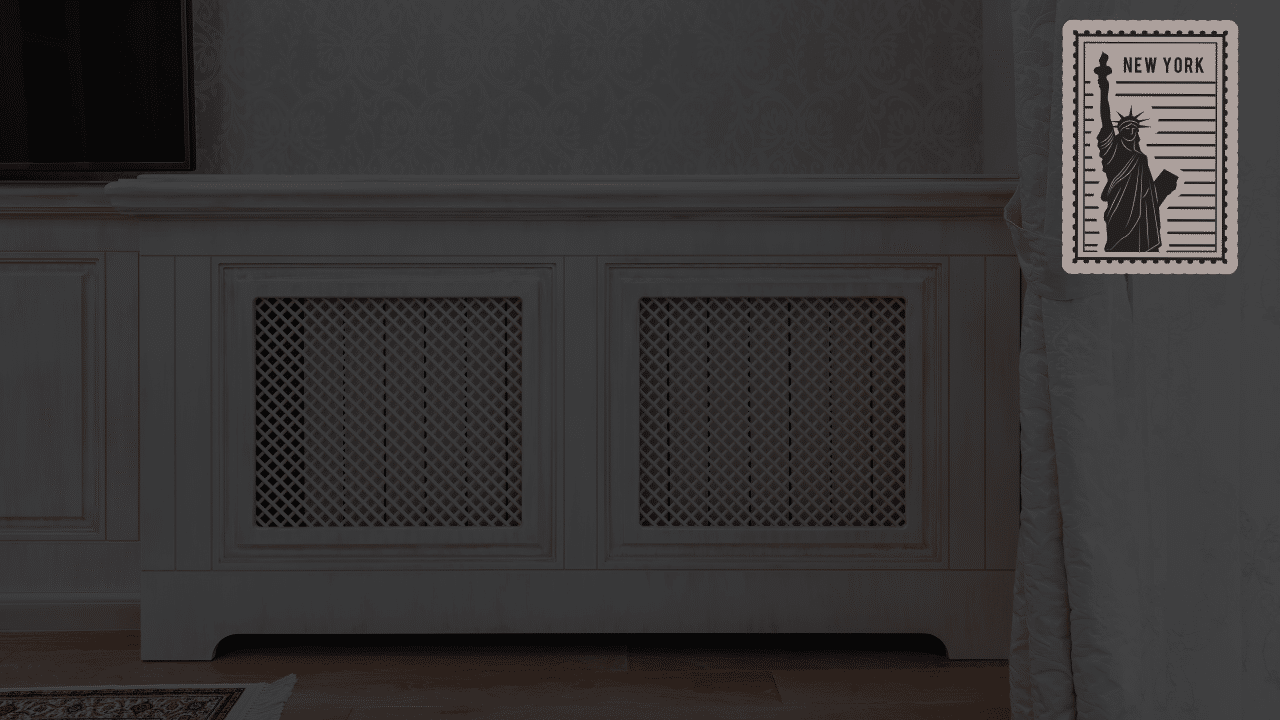
In New York City, great interior design often comes down to solving practical problems beautifully. Apartments, brownstones, co-ops, condos, and townhomes may have incredible character, but they also come with details that are not always easy to design around. Exposed radiators are one of the most common examples. In this article, we’ll explore and explain custom made radiator covers for beautiful New York home interiors.
A radiator may be necessary for comfort, but visually, it can make a room feel unfinished. It can sit directly below a window, interrupt a wall, limit furniture placement, or draw attention away from the rest of the interior. That is why many homeowners and designers choose custom radiator covers as a smart way to improve both style and function.
A well-designed cover does not simply hide a radiator. It makes the room feel more intentional. It can create cleaner architectural lines, add a useful surface, support a more polished design, and help the radiator blend naturally into the home.
Why Custom Matters for Radiator Covers
New York homes are rarely standard. Older apartments may have uneven walls, thick trim, unusual radiator sizes, tight clearances, or steam radiators placed in difficult locations. Modern condos may need a cleaner, more minimal solution that coordinates with nearby cabinetry and millwork.
That is why radiator covers custom designed for the actual space are often a better choice than ready-made options. A store-bought cover may look fine in photos, but it may not fit properly once placed in a real New York interior. It can leave awkward gaps, block access to valves, interfere with airflow, or look disconnected from the rest of the room.
A custom made radiator cover is built around the exact radiator, wall conditions, window height, floor level, and surrounding details. The result feels more architectural and less like a temporary fix with https://www.ivenkostudio.com/radiator-covers.
How much do custom radiator covers actually cost in NYC
Pricing for custom radiator covers in New York varies considerably based on material, size, and design complexity, but knowing the general range helps set realistic expectations before reaching out for quotes.
At the simpler end, custom-fit covers built from engineered wood typically start in the low hundreds of dollars, with several NYC-area specialists pricing standard custom units around $325 per linear foot. Fully bespoke pieces built to match existing pre-war trim or decorative molding, particularly from woodworking studios that fabricate by hand, commonly start around $500 per cover and increase from there depending on scope, according to coverage from Brick Underground’s guide to NYC radiator covers. Powder-coated metal enclosures sit at a different point on the spectrum and are a common choice where durability and low maintenance matter more than custom millwork detail, which makes them frequently used in rental buildings.
Three factors most consistently push the final price up: integrating the cover into surrounding built-in cabinetry rather than treating it as a standalone piece, matching or replicating existing decorative trim found in pre-war buildings, and adding functional elements such as a usable bench seat, storage, or a hinged access panel for an AC or PTAC unit.
Getting two or three quotes for the same radiator, with the same material and finish specified clearly to each fabricator, is the most reliable way to compare pricing fairly, since an identical general description can otherwise yield very different numbers depending on what each company assumes is included.
A Better Fit for NYC Apartments and Brownstones: Custom Made Radiator Covers
A good NYC radiator cover should look like it belongs in the room. In a pre-war apartment, that may mean a classic painted cover that works with existing trim and window details. Moreover, brownstone, it may mean a more traditional radiator cabinet that respects the character of the home. In a modern apartment, it may mean a clean, minimal enclosure with simple lines and a quiet finish.
With custom made radiator covers, homeowners have more control over proportions, materials, grille style, finish, and how the cover relates to the rest of the space. The cover can be simple and understated, or it can become part of a larger millwork feature with shelving, storage, or built-in cabinetry.
This level of flexibility is especially valuable in New York, where every inch of usable space matters.
Airflow, Access, and Everyday Function
A radiator cover custom built for a home should not only look good. It also needs to work properly. Radiators, HVAC units, AC units, and PTAC systems all have practical requirements. They need airflow, service access, and enough clearance to function as intended.
Poorly designed covers can block heat, make cleaning difficult, or hide controls and valves. A professional custom approach considers these details before fabrication begins. The design should allow heat to circulate, provide access where needed, and make maintenance easier instead of harder.
That is one of the biggest reasons to work with a studio that understands radiator covers custom made for New York interiors. The right cover balances appearance with performance.
Steam heat versus hot water heat: why it changes the cover design
A detail that matters enormously in New York specifically, and far less in most other US markets, is the type of heating system behind the radiator. Much of New York’s pre-war housing stock, including classic apartments and many brownstones, still runs on one-pipe steam heat, where individual radiators are not thermostatically controlled the way a modern hot water system is. Steam radiators reach surface temperatures considerably higher than hot water radiators, and they vent air through a small valve that needs to remain completely unobstructed for the heating system to work at all.
This has two direct implications for cover design. A steam radiator needs more generous airflow clearance than a comparable hot water unit, both to let heat actually reach the room and to keep temperatures inside the enclosure from building to unsafe levels. The radiator’s air vent also must remain fully accessible, since blocking it can prevent the radiator from heating, a problem that shows up as a confusingly cold room rather than an obvious mechanical failure.
Hot water and hydronic radiators, more common in newer condo construction, run cooler and more consistently, generally allowing for a tighter-fitting cover with less ventilation surface needed. Confirming which heating system serves your specific apartment, often a quick question for your building superintendent, is worth doing before finalizing a cover design.
Custom Made Radiator Covers Turning an Awkward Feature into a Design Detail
Many homeowners think of radiators as something to hide. But with the right design, a radiator area can become one of the most finished-looking parts of the room.
A custom cover can create a useful top ledge for books, plants, framed photos, or decorative objects. Firstly, in a bedroom, it can make the area under the window feel calm and complete. secondly, in a living room, it can help the wall feel more balanced. In a home office or nursery, it can reduce visual clutter and create a cleaner, safer-looking space.
For apartments where storage and surface space are limited, even a simple cover can make the room work better. Instead of an exposed metal unit, the radiator becomes part of the design.
When a stock or semi-custom cover is actually the right choice
Not every radiator situation calls for a fully custom solution, and a useful guide should say so honestly. Stock or semi-custom covers, available in standard sizes with some adjustability, work well for a straightforward radiator against a flat wall with typical proportions and no surrounding millwork to match. These options are generally faster to source and lower in cost than a bespoke piece.
They tend to fall short specifically in the situations this article focuses on: pre-war apartments with decorative existing trim, brownstones with non-standard radiator placement, or any project where the cover needs to function as part of a larger millwork feature rather than a standalone object.
The practical test is simple. If a radiator sits in a plain rectangular alcove with standard clearances, a quality stock cover sized correctly will likely perform and look just as well as a custom one, at meaningfully lower cost. If the placement is irregular, the surrounding trim is decorative, or the cover needs to do more than one job, such as storage or seating, custom fabrication becomes the more reliable path to a result that looks intentional rather than retrofitted.
Custom Radiator Covers by Ivenko Studio
Ivenko Studio designs, builds, and installs custom radiator covers for New York homes where fit, airflow, and finish matter. Their work is suited for apartments, brownstones, co-ops, condos, and townhomes that need something more precise than an off-the-shelf solution.
Each project begins with the real conditions of the space. Measurements, radiator size, valve locations, wall conditions, nearby trim, and design goals all shape the final result. From there, the cover can be planned around the room’s style and the practical needs of the heating or cooling system.
Whether the project calls for a standalone custom made radiator cover, a built-in enclosure, a radiator cabinet, or a cover that coordinates with surrounding millwork, the goal is to make the finished piece feel natural in the room.
A note on landmark buildings and co-op or condo board rules
Radiator covers are interior, non-structural elements, so landmark preservation rules, which generally govern a building’s exterior appearance, typically do not apply to them. That said, co-op and condo boards in many NYC buildings maintain their own interior alteration policies, and some buildings with significant pre-war architectural detail have specific guidance on what can be installed around original radiators or trim, thinking through interior design decisions room by room.
Before commissioning a custom cover, a quick check of your building’s alteration agreement, or a brief conversation with your managing agent, is a far simpler step to take before fabrication begins than after a finished piece is ready for installation.
Materials, Finishes, and Style Options
Custom radiator covers can be designed in many styles. Some homeowners prefer a painted finish that blends into the wall. Others want wood details that coordinate with cabinetry, flooring, or existing millwork. Grille patterns, panel layouts, hardware, proportions, and edge details can all affect the final look.
The best radiator cover custom projects are not overdesigned. They are thoughtful, balanced, and suited to the home. The cover should improve the room without calling too much attention to itself, unless the design intentionally makes it a feature.
Material and safety considerations worth asking about
Because a radiator cover sits in direct, sustained contact with a heat source, materials and construction details matter more here than in most furniture or millwork decisions.
Paint finish is the most commonly overlooked safety detail. Reputable fabricators use lead-free paint as standard, which matters in particular for older NYC buildings, and any finish applied directly to or near a heat source should meet current safety standards regardless of the building’s age. For households with young children, rounded corners on the cover are a small design choice that meaningfully reduces injury risk around a piece of furniture that sits at a height where a toddler is likely to make contact with it.
Material choice also affects long-term durability near sustained heat. Moisture-resistant engineered wood products are specifically formulated to hold up better than standard MDF in a location that experiences regular heat cycling, since cheaper engineered wood can warp or delaminate after a few heating seasons of direct exposure. Solid wood and properly finished metal are both durable alternatives, each with different maintenance and cost tradeoffs worth discussing directly with whichever fabricator you choose.
Custom Made Radiator Covers Final Thoughts
Radiators are part of many New York homes, but they do not have to make a room feel unfinished. With the right custom solution, an exposed radiator can become a clean, useful, and attractive architectural element.
For homeowners, designers, and property owners looking for radiator covers custom made for real NYC interiors, Ivenko Studio offers a thoughtful approach focused on fit, airflow, access, materials, and style. A custom radiator cover can make the space look better, work better, and feel more complete every day.
Custom radiator covers FAQ
Pricing varies by material and complexity, but custom radiator covers in the New York area commonly start around $300 to $500 for simpler engineered wood designs and increase from there for solid wood, integrated millwork, or multi-radiator projects. Getting itemized quotes from two or three local fabricators for the identical specification is the most reliable way to compare actual pricing.
Yes, when designed correctly. A cover built for a steam radiator needs more generous ventilation than one built for hot water heat, since steam radiators run hotter and rely on an unobstructed air vent to function. A qualified fabricator should ask which type of heating system serves your apartment before finalizing a design, since this directly affects the required clearances.
For a straightforward radiator in a standard-sized alcove, a quality stock or semi-custom cover can be installed without professional fabrication. Custom fabrication becomes more valuable when the radiator placement is irregular, the surrounding trim is decorative, or the cover needs to integrate with built-in cabinetry or serve an additional function like seating or storage.
Radiator covers are generally interior and non-structural, so landmark preservation rules typically do not apply. Some buildings do have their own interior alteration policies, however, so checking with your managing agent before installation is a reasonable precaution.
This depends on priorities. Moisture-resistant engineered wood handles sustained heat cycling well and takes paint smoothly, making it a popular mid-range choice. Solid wood offers a more premium look and can be stained or painted to match existing millwork. Powder-coated metal is especially durable and low-maintenance, which makes it a common choice for rental buildings or higher-traffic installations.