Romance scams cost Americans more than $1.16 billion in the first nine months of 2025 alone, a 22% increase year over year according to FTC Consumer Sentinel data, and the vast majority start with a fake profile.
Knowing how to find fake dating profiles before you invest time and emotion is one of the most practical skills for anyone using Tinder, Bumble, Hinge, or Match. The good news: fake profiles leave traces. A few targeted checks can surface them in under 10 minutes.
The methods below are ordered by reliability rather than convenience. Behavioural signals first, because they are free and they catch the most. Reverse image search second, with a caveat about what has changed. Paid identity tools last, because they are the least reliable of the three and the most commonly oversold. This guide explains exactly how to use that approach, alongside free manual methods that work on any platform.
What Are Fake Dating Profiles and Why Do They Exist
A fake dating profile is any account that misrepresents the identity of the person behind it. The deception ranges from minor to severe, but the most common types you’ll encounter are:
- Romance scammers — Operate organized fraud. They build emotional connections over weeks or months before requesting money for emergencies, travel, or investments. Most work from overseas scam centers running dozens of fake accounts simultaneously.
- Catfishers — Use someone else’s photos to pretend to be a different person. Motives include emotional manipulation, revenge, or simply wanting attention they wouldn’t otherwise receive.
- Bots — Automated accounts programmed to generate engagement, harvest contact details, or drive users to external sites.
- Data harvesters — Fake accounts designed to collect personal information you share in conversation.
- Married or misrepresenting individuals — Real people who lie about relationship status, age, or location.
Understanding the type of fake profile you may be dealing with shapes which verification method you use first.
8 Warning Signs of a Fake Dating Profile
Most fake dating profiles follow recognizable patterns. Before investing any time in a match, scan for these signals:
- Too-perfect photos. Every image looks like a professional shoot. Real people post selfies, group photos, and casual shots. Model-quality photos in every frame suggest stolen images.
- Only one or two pictures. Limited photo availability usually means limited access because the images were taken from someone else’s account.
- Vague or generic bio. “I love to travel and have fun” with no real specifics is a red flag. Fake profiles use bios that could apply to anyone.
- Immediate intense interest. Expressing strong feelings within days of matching is a manipulation tactic. It’s called “love bombing,” and it’s designed to accelerate emotional connection before critical thinking kicks in.
- Excuses to avoid video calls. Broken camera, bad signal, camera shy these become standing excuses when someone is hiding their real appearance.
- Pushing to move off the app quickly. Suggesting a switch to WhatsApp, Telegram, or personal email early in the conversation means they want to leave behind the app’s fraud monitoring.
- Story inconsistencies. Details about their job, city, or past contradict each other across different conversations.
- Money requests. Regardless of how gradual or justified the framing, any financial request from someone you’ve never met in person is a definitive scam signal.
One or two of these signs might be coincidence. Three or more mean it’s time to verify.
The Variant That Takes the Most Money
Most romance scam advice describes the classic pattern: emotional connection, then an emergency requiring money. That still happens and it is no longer where the largest losses occur.
Pig butchering combines a romance approach with a fake investment platform. The name comes from the operators’ own term for fattening a target before slaughter. The structure:
- A warm, patient relationship, often over months, with no request for money
- Casual mention of their own success trading crypto or forex
- Reluctant sharing of a “platform” they use, sometimes framed as doing you a favour
- A small initial deposit that shows real gains, and a withdrawal that actually works
- Escalating deposits as trust builds
- At withdrawal, sudden fees, taxes, or account freezes, each requiring more money
Why it defeats the standard advice. The person never asks you for money, which is the red flag most people are watching for. You send money to a platform, voluntarily, as an investment decision. Early withdrawals succeeding is deliberate, and it is what converts caution into confidence.
Cryptocurrency has overtaken wire transfers as the leading payment method in romance fraud, which is a direct consequence of this shift. The CFTC’s guidance on romance frauds covers the pattern, and FinCEN, the SEC and the FBI have all issued alerts on it.
The rule that covers it: never invest through a platform introduced by someone you met online, regardless of how the introduction was framed and regardless of whether small withdrawals worked. That is the whole defence, and it does not require identifying anything about the person.
How to Find Fake Dating Profiles: 5 Verification Methods
1. Reverse Image Search Their Photos
This is the fastest and most effective first check. If someone is using stolen photos, a reverse image search will usually find them within 30 seconds.
- Save or screenshot their profile photos all of them, not just the main image.
- Go to Google Images (images.google.com) and click the camera icon to upload a photo.
- Review results for the same face appearing under a different name, on modeling portfolios, stock photo sites, or other dating profiles.
- If a photo shows up on someone else’s Instagram or is attributed to a model, the profile is fake stop communicating immediately.
Use more than one engine. Google Images is the default and it is not the best at faces. Yandex consistently outperforms it on facial matching, and TinEye finds older versions of an image that other engines miss. Run all three before concluding anything, and search every photo rather than just the main one.
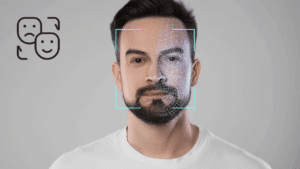
Why a clean result no longer means what it used to. The FBI warned in February 2026 that criminals are increasingly using AI to generate realistic photos, videos and voice messages for romance scams. An AI-generated face does not exist anywhere else on the internet, so reverse image search returns nothing at all. A clean result used to suggest the photo was probably original. Now it is equally consistent with a photo that was never real. The techniques behind these images are the same ones covered in this look at what AI face swap technology can and cannot do, which is worth understanding if you are trying to spot it.
What to look for instead when the search comes back empty:
- Backgrounds that dissolve. Generated images handle faces well and edges badly. Look at text on signs, patterns on fabric, and where hair meets background.
- Hands and jewellery. Still the most common failure point. Count fingers, check whether earrings match.
- Identical framing across photos. Generated portraits often share the same head position and crop, because that is what the model produces.
- No candid shots. Real people have blurry photos, group shots, bad lighting, photos taken by someone else. A profile of nine polished portraits and nothing else is a signal on its own.
Absence of reverse image results is now a reason to look harder, not a reason to relax.
2. Search Their Contact Details, With Realistic Expectations
If someone shares a phone number or email, you can look for corroboration. This is worth doing and it is worth understanding what it can and cannot tell you.
What a search can genuinely confirm. If a match tells you they are a nurse in Portland named Sarah and a search returns a Sarah at a Portland address with matching associated details, that is corroboration. Details lining up with what someone told you is a positive signal.
What a search cannot tell you. Sparse results do not indicate a scammer. They indicate sparse public records, and plenty of real people have those: anyone using a Google Voice or Skype number, anyone using an email alias, anyone under thirty, anyone who recently moved countries, and anyone who has deliberately opted out of data broker listings. Treating a thin result as evidence of fraud will make you suspicious of privacy-conscious people while missing the organised operations that buy aged accounts precisely because they know this check exists.
Use it to confirm, never to accuse. A search that corroborates what someone told you adds confidence. A search that returns little tells you almost nothing either way, and should send you back to the behavioural signals in the list above, which are considerably more reliable.
Tools in this category include dating-profile-search.searqle.io, Social Catfish, and Spokeo, among others. They all draw on broadly similar public record aggregation. Before subscribing to any of them, check the renewal terms rather than the headline price, because low-cost trials in this sector frequently convert to weekly or monthly billing at considerably higher rates, and cancellation is not always as straightforward as signup.
The free checks in this article are more reliable than any paid tool. Behavioural red flags, reverse image search across multiple engines, and an unscripted video call will catch more fake profiles than a records lookup, and they cost nothing. The broader question of what your own data exposure looks like, and how casually it accumulates, is covered in how browsers and accounts leak more than people expect.
3. Check Their Social Media Footprint Manually
Real people leave a varied, long-running digital trail. Open each major platform and search their name, username, and any location they’ve mentioned.
Use this quick checklist:
- Search Facebook, Instagram, LinkedIn, TikTok, and Twitter/X using their name and claimed city.
- Confirm the account isn’t brand new (check the join date where visible or look at the oldest posts).
- Check whether friends or family tag them in photos real accounts have this; fake accounts don’t.
- See if their bio or photos across platforms are consistent with what they’ve shown you on the dating app.
- Search Google for their name plus “dating scam” to see if others have reported them.
Complete absence across all platforms is unusual for any adult in 2026. It doesn’t automatically mean fake, but it warrants deeper verification.
4. Request a Live Video Call
A video call is the most direct confirmation that the person exists and looks like their photos. Real people are usually willing to video chat after a reasonable amount of conversation one to two weeks is normal.
When you’re on the call:
- Confirm they clearly match their profile photos. Look at face structure, features, and approximate age.
- Notice the background, lighting, and time of day relative to their claimed location. A “New York professional” who only calls at 3 AM Eastern likely isn’t in New York.
- Ask a spontaneous question that requires a real-time thoughtful answer. Scripted scam operators often pause noticeably or give generic responses.
One update worth knowing: real-time face swap software now runs on ordinary consumer hardware, so a video call is strong evidence rather than proof. Quality degrades under unexpected movement, so ask them to turn their head fully to the side, wave a hand slowly across their face, or hold up a specific number of fingers next to their cheek. Most consumer-grade fakes break under those.
5. Cross-Reference Their Story Details
Claims about their job, employer, school, or neighborhood can be verified. If they say they work at a specific company, check LinkedIn for employees matching their name and role. If they claim to live in your city, they should know basic local geography and current events.
Track details across your conversation and look for contradictions. Legitimate people tell consistent stories. People running scripted deceptions forget earlier fabrications and contradict themselves across weeks of messages.
What to Do If You Confirm a Profile Is Fake
Once you’ve confirmed a profile is fake, act quickly and cleanly:
- Stop communicating immediately. Do not confront them confrontation gives a skilled manipulator an opening to talk their way back in.
- Report the profile through the dating app. Use the in-app report feature and provide any evidence. This protects other users. Reporting matters beyond your own case. The same reasoning applies to how platforms handle engagement and account authenticity generally, where the systems detecting fake behavior are the ones protecting real users.
- Block on every platform where they’ve contacted you, including any messaging apps they pushed you to.
- Do not send money under any circumstances. If you have already sent money, contact your bank immediately and file a report with the FTC at ReportFraud.ftc.gov.
- Warn the platform if photos were stolen. If reverse image search reveals whose photos were used, the real person may not know their images are being used for fraud.
Frequently Asked Questions
Research estimates that between 5% and 10% of profiles on major dating platforms involve some form of identity deception. On free platforms with minimal moderation, the proportion is higher.Romance scam losses reported to the FTC exceeded $1.16 billion in the first nine months of 2025, up 22% year over year, with most victims meeting the scammer on a dating app or social media.
Yes. Using publicly available information, reverse image search tools, and people search services for personal safety purposes is legal in the US. The legal limitation applies to FCRA-regulated purposes such as employment screening, tenant screening, or credit decisions none of which apply to online dating verification. This describes the US position. In the UK and EU, GDPR restricts processing of personal data and the position on people search services is considerably more constrained. Check local rules if you are outside the US.
Reverse image search, but run it through Yandex as well as Google, because Yandex is consistently better at facial matching. Search every photo, not just the main one. If the same face appears under a different name or on a modelling site, you have your answer in under a minute. If the search comes back completely clean, that is no longer reassuring on its own, because AI-generated faces return nothing at all. Move to the behavioural signals and an unscripted video call.
They work from contact details or photos rather than from dating app usernames, so the platform you met on is irrelevant. What matters is whether your match has shared a phone number or email. Bear in mind what that search can tell you: corroboration of details they have given you is useful, and a sparse result is not evidence of anything, since plenty of real people have thin public records.
Treat it as a disqualifying red flag. Anyone who is genuinely interested in dating you understands why you’d want to confirm they’re real. Persistent, creative excuses to avoid showing up live are the clearest behavioral indicator that the person is not who they claim to be.