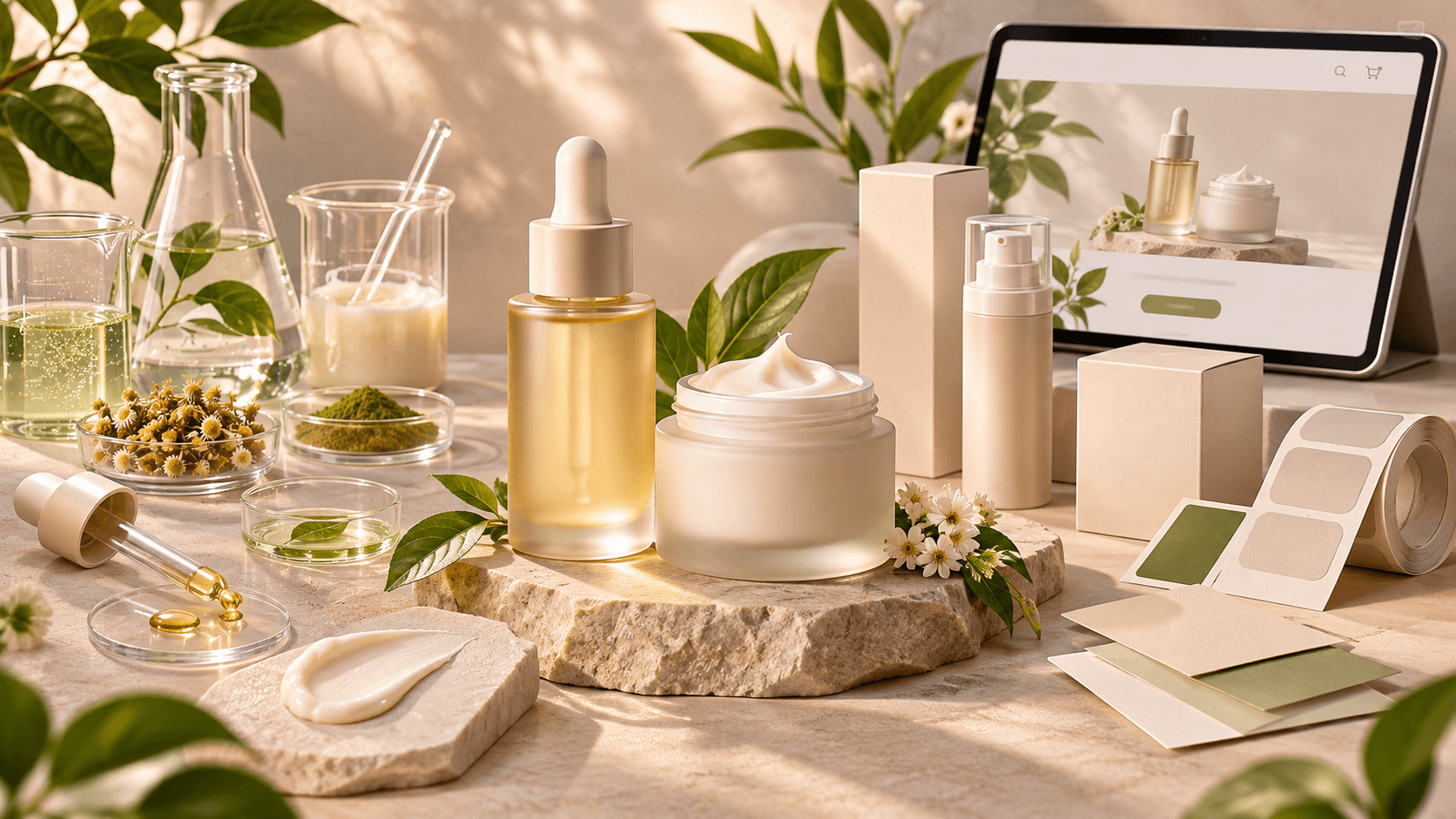
Quick answer: When designing a skincare brand, choose the formula first, then the packaging, then the visual identity and website. The formula decides the brand’s tone, the packaging must be compatible with the formula, and the website has to explain ingredients and use. Private label skincare is the fastest route; custom formulation gives a unique product but takes longer.
Designers and agencies are increasingly asked to build skincare brands, not just websites. A client arrives with a name and a mood board and asks for the full package: logo, packaging, product pages and a launch campaign. What many designers don’t realise is that the product itself shapes almost every design decision. Here is how the pieces fit together.
1. The formula comes first
Brand identity follows the product, not the other way round. A minimalist, clinical brand needs formulas with clear actives and short ingredient lists. A botanical, sensory brand needs rich textures and strong natural scents. Before any logo work, the client should decide between two routes:
- Private label: ready, tested formulas sold under the client’s name. Fast, affordable and ideal for a first launch.
- Custom formulation: a chemist develops or adapts a formula to the brand’s brief. Slower and more expensive, but the product is truly the brand’s own.
Manufacturers that offer both private label skincare and custom formulation can often combine the two: start from an existing base and adjust the fragrance, texture or key active to match the brand concept.
2. Packaging is a technical decision, not only a visual one
The bottle you design must work with the formula. Oils need glass or compatible plastics. Vitamin C and retinol need airless pumps. Thick creams don’t pour from narrow necks. Before designing a single label, ask the manufacturer which containers they can fill and what the label area is. That avoids reprinting thousands of labels later.
Keep EU labelling rules in mind too. The ingredient list, batch number, best-before or period-after-opening symbol and the responsible person’s address all need space. Good packaging design leaves room for them without spoiling the look.
3. The website has to explain the product, not just show it
Skincare buyers read. They want to know what is in the product, which skin type it suits and how to use it. Build product pages with:
- a short benefit-led headline
- key ingredients and what they do
- texture and scent described in plain words
- usage instructions
- full ingredient list for those who check
Real photography of textures and swatches converts better than renders alone.
4. Plan the timeline around production
Production usually takes six to ten weeks from order to delivery, and custom formulas add development and testing time. Align the website launch and campaign with the delivery date, not the design deadline. Many European manufacturers now start production from around 500 units per product, which keeps the first run manageable for a new brand.
5. Choose a manufacturer that handles compliance
In the EU, every product needs a safety assessment and CPNP notification before sale. A partner such as Made By Nature Labs handles this and can provide GMP certificates, which leaves the agency free to focus on brand and growth.
Conclusion
Great skincare branding starts in the lab. When the formula, packaging and website are planned together, the result is a brand that looks good, works well and is ready to sell legally from the first day.
Private label vs custom formulation at a glance
| Private label | Custom formulation | |
|---|---|---|
| Formula | Ready, tested formula | Developed or adapted for the brand |
| Time to market | About six to ten weeks of production | Several months of development plus production |
| Upfront cost | Low | Higher |
| Uniqueness | Shared base, own branding | Unique to the brand |
| Best for | First launches, testing a market | Proven brands with a clear product idea |
Frequently asked questions
What should a designer know before creating skincare packaging?
Which containers the manufacturer can fill, the exact label area, and which EU label elements are mandatory: ingredient list, batch number, period-after-opening or best-before symbol and the responsible person’s address.
Can a private label formula be adjusted to fit a brand concept?
Often yes. Many manufacturers can change the fragrance, texture or a key active ingredient on an existing base, which gives a more distinctive product without full custom development.
What should a skincare product page include?
A benefit-led headline, the key ingredients and what they do, a plain description of texture and scent, how to use it, and the full ingredient list. Real texture photography helps conversion.
When should a skincare website go live?
Align launch with the confirmed delivery date from the manufacturer, not the design deadline, so customers can buy as soon as the campaign starts.