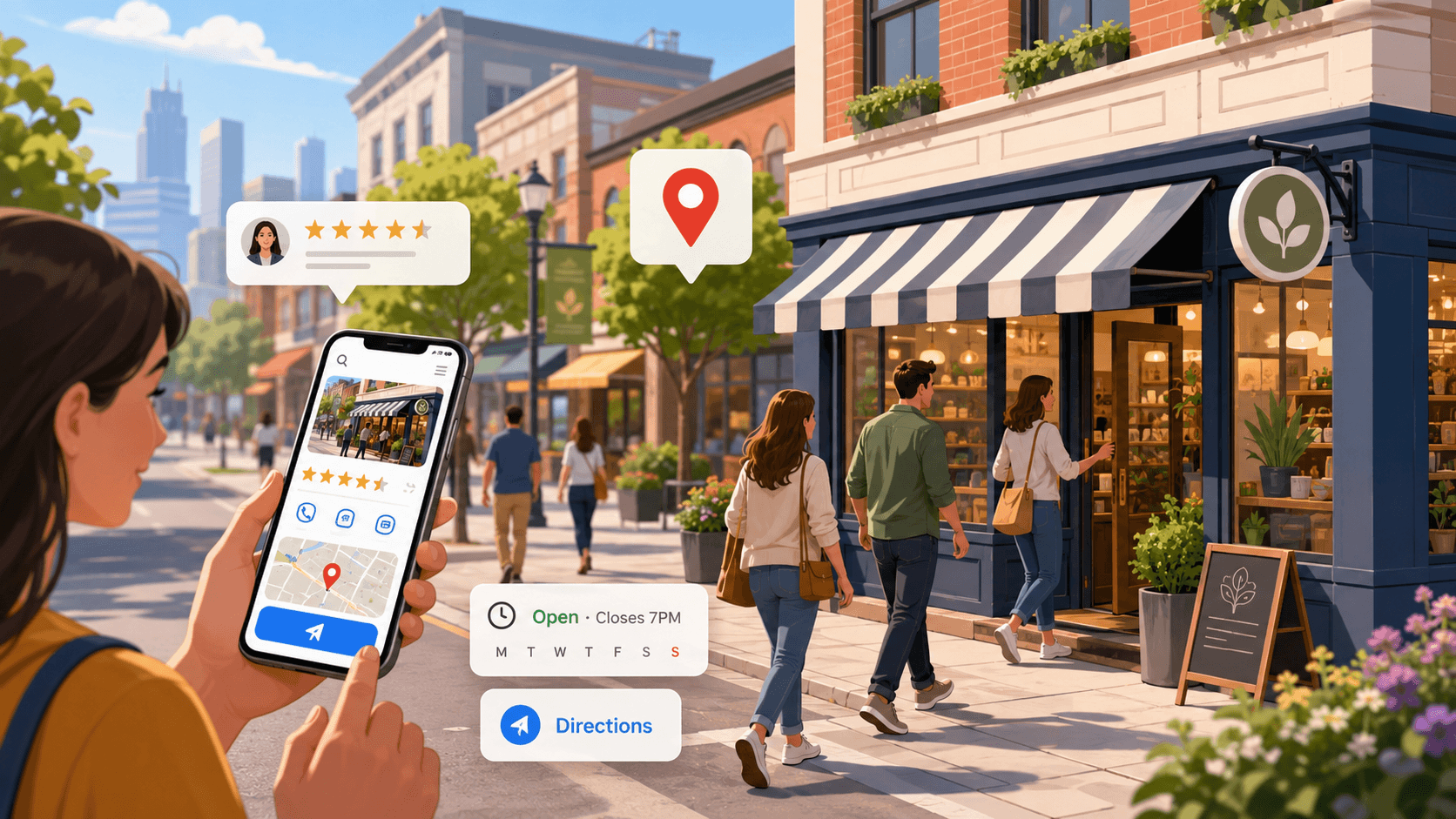
Modern consumers do not just walk into storefronts by chance anymore. Today, nearly half of all daily search engine queries carry local intent, meaning users are actively seeking out nearby businesses and services in their immediate geographic area. For web designers and developers, this shift places a heavy burden on the structural design of a website. A well-designed location page is no longer just a digital flyer. It is a primary driver of physical foot traffic and offline revenue. When a user searches for a service nearby, the digital experience they encounter dictates their next real-world action. If the page is slow, confusing, or lacks vital information, that potential customer will simply walk over to a competitor.
Laying the Groundwork with Mobile Architecture
Before diving into the specifics of an individual location page, developers must look at the overarching site structure. Research shows that an impressive 76 percent of smartphone users who search for a nearby business visit a physical location within 24 hours. Because the vast majority of these regional searches occur on mobile devices, the underlying framework of the website must be built to accommodate smaller screens and varied connection speeds. As developers have noted in comprehensive guides detailing a mobile-first design strategy, optimising page speed and core web vitals is a foundational requirement for any modern build.
If a mobile page takes longer than three seconds to load, analytics data reveals that over half of users will abandon the site entirely. When bounce rates spike, search engines take notice and lower the page rank accordingly. Furthermore, a speed deficit directly impacts commercial revenue. Studies show that even a fractional improvement in site speed correlates with significant increases in overall customer spending, proving that technical performance is a core business asset.
Integrating Technical Elements for Search Visibility
Once the mobile framework is secure, the focus must shift to how technical design choices influence search engine rankings. A common mistake is treating location pages purely as aesthetic assets rather than structural tools. The reality is that specific architectural choices are what make a comprehensive strategy for local seo actually work in highly competitive markets. This includes correctly implementing structured data to communicate directly with search engine crawlers, ensuring they understand exactly where the business operates.
Industry research indicates that the majority of pages ranking at the top of local search results utilise some form of schema markup. Case studies indicate that using JSON-LD to define precise operating hours, service areas, and geo-coordinates can drastically improve click-through rates by earning rich snippets in search results. Furthermore, accuracy is absolutely critical. Modern consumers are highly sensitive to incorrect information. Roughly 62 percent of users report they would actively avoid a business if they discovered an inaccurate address or outdated hours online. Ensuring your site architecture pulls from a single source of truth for location data prevents these costly inconsistencies.
Designing Location Pages for Trust and Conversions
Technical performance gets a site to rank, but the user experience determines if a visitor will actually walk through the physical doors. Trust signals are a massive part of this equation. Designing your location pages to prominently feature social proof is no longer optional in today’s competitive landscape. According to recent consumer behaviour research, 97 percent of consumers read reviews when evaluating local businesses, and a significant portion check them before making any purchasing decision.
Embedding live review feeds directly onto the location page provides immediate validation. Rather than forcing users to navigate away to a third-party directory or search engine map, incorporating these trust signals into the layout keeps potential customers engaged with your brand. Coupled with high-quality, authentic imagery of the storefront and interior, these design elements bridge the gap between digital discovery and real-world visits.
Essential Features of a High-Converting Location Page
When building or updating a location-specific landing page, ensuring it has the right mix of technical and user-facing elements is vital. Here are the structural components every page should include to maximise search visibility and in-store visits:
- Prominent NAP Information: The Name, Address, and Phone number must be crawlable text (never an image) and precisely match the details on your Google Business Profile.
- Embedded Interactive Maps: Adding an interactive map helps users immediately grasp your proximity and easily generate driving or walking directions.
- Clear Calls to Action: Use sticky mobile buttons for actions like calling the store or getting directions, so users can take immediate action without scrolling back to the top of the page.
- Location-Specific Content: Avoid duplicate text across different branch pages. Include unique descriptions of the surrounding neighbourhood, parking instructions, and specific services offered at that exact location.
- Accessible Operating Hours: Clearly display standard trading hours, along with dynamic updates for public holidays or special events to prevent customer frustration.
Creating effective location pages requires a delicate balance between technical web design and strategic marketing principles. By prioritising mobile responsiveness, implementing accurate schema markup, and designing for user trust, developers can build digital assets that consistently deliver real-world results. In a landscape where digital discovery directly fuels offline revenue, treating location pages with architectural precision is the key to sustainable business growth.
Location pages and Google Business Profile are one system, not two
Treating the website location page and the Google Business Profile listing as separate assets is one of the most common structural mistakes in local SEO. They should function as one connected system pulling from the same source of truth.
Every location page should link directly to its corresponding Google Business Profile listing, and the categories, services, and hours entered in the profile should exactly match what the page itself states. When these two drift out of sync, which happens easily when hours change seasonally or a location adds a new service, Google has two conflicting signals for the same business, which can suppress visibility in the local map pack rather than help it. Assigning one person or one process to update both simultaneously, rather than treating the website and the profile as separate ownership areas, closes this gap at the source. For the broader technical foundation this connects to, Visualmodo’s guide to why website experience matters for local businesses covers the trust signals search engines and customers both weigh together.
How to actually avoid duplicate content across dozens of location pages
The advice to avoid duplicate text across branch pages is correct and, at scale, genuinely hard to execute manually. A business with 30 locations cannot realistically hand-write entirely unique long-form content for every single page without significant ongoing cost.
The practical solution most successful multi-location sites use is a hybrid template: a consistent page structure and required fields, hours, services, NAP, that stay standardized for consistency and schema accuracy, combined with a small number of genuinely unique content blocks per location, a two-to-three sentence description of the specific neighborhood, parking situation, or nearby landmarks, plus location-specific customer reviews pulled in dynamically rather than generic testimonials repeated across every page. This gives search engines enough unique, location-specific signal per page to avoid a thin-content flag, without requiring a full unique article for every branch. Prioritizing this unique-content effort on the highest-traffic locations first, then working down the list, is a realistic way to scale it over time rather than treating every location as equally urgent on day one. This pairs directly with Visualmodo’s coverage of integrating mobile web design and local SEO for regional marketing, which addresses the same regional-scale challenge from the mobile design side.
Location page design FAQ
Yes, as closely as possible. Name, address, phone number, hours, and category should match exactly across the website page and the Google Business Profile listing. Mismatches between the two are a common, avoidable cause of reduced local search visibility.
Use a consistent structural template for required fields like hours and services, but add a small number of genuinely unique content elements per location, a short description of the immediate neighborhood or parking, and location-specific customer reviews rather than repeated generic testimonials. Prioritize unique content work on the highest-traffic locations first.
A storefront business should display its public address prominently, since customers visit that location directly. A service area business, one that travels to customers rather than hosting them, should generally not display a public street address at all, per Google’s own guidelines, and should instead clearly define the geographic area served.
At minimum, LocalBusiness schema covering name, address, phone number, hours, and geo-coordinates. Adding review schema where genuine reviews exist, and service-specific schema for the specific offerings at that location, further helps search engines understand and potentially surface rich snippets for the page.