Search engine optimization has become a major growth channel for small businesses, but it can also feel overwhelming. Website owners are expected to understand technical SEO, meta tags, content structure, page speed, image optimization, internal links, backlinks, keyword targeting, and now even AI-powered search visibility. In this comprehensive guide, we’ll explain how small business websites can automate SEO without hiring an agency or spending a lot of money.
For many small businesses, hiring a full SEO agency is expensive. At the same time, doing everything manually can take too much time. This is where SEO automation becomes useful. It does not replace strategy or good content, but it can help website owners handle many repetitive SEO tasks faster and more consistently.
Why Small Businesses Struggle With SEO
Most small business websites are not managed by SEO experts. They are often managed by the owner, a marketing assistant, a freelancer, or a small web design team. The site may look good visually, but still miss important SEO basics.
Common issues include:
- Missing or duplicated page titles
- Weak meta descriptions
- Poor heading structure
- Images without alt text
- Slow or heavy pages
- Thin content
- Broken links
- Missing internal links
- Pages that are difficult for search engines to understand
- No clear SEO workflow after the website is launched
These issues can quietly reduce organic visibility. The business may continue publishing pages or blog posts without realizing that basic SEO improvements are being missed.
What automation actually costs compared to an agency
The premise of this guide is avoiding agency cost, so it’s worth being specific about both sides of that comparison. A small business SEO retainer with an agency commonly runs $500 to $2,500 or more per month depending on scope and market competitiveness. Automation software in this category typically runs $20 to $100 monthly for small-site plans, occasionally more for larger sites or agency-tier accounts managing multiple properties.
This isn’t a like-for-like substitute, and it’s worth being honest about that rather than overselling automation’s role. A tool in the $30-a-month range finds and helps fix technical and on-page issues efficiently. It doesn’t develop content strategy, build genuine backlink relationships through outreach, or make judgment calls about brand positioning, the same distinction this article’s own section on where human review still matters makes correctly. The realistic value proposition is a meaningfully lower cost for the repetitive, checklist-style work, not a full replacement for strategic SEO judgment. For a fuller picture of the manual checklist this kind of automation is built to speed up, Visualmodo’s essential SEO checklist covers the same ground in more depth.
What SEO Automation Actually Means
SEO automation does not mean pushing a button and magically ranking first on Google. A better definition is:
SEO automation means using software to find, prioritize, and improve SEO tasks that would otherwise need manual checking.
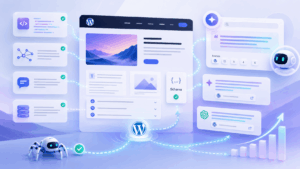
For small businesses, this can include automated site audits, page-level recommendations, technical checks, content improvement suggestions, keyword visibility tracking, and reminders about issues that should be fixed.
Good automation helps answer questions like:
- Which pages need better titles?
- Which descriptions are missing or too weak?
- Which images need alt text?
- Are there technical issues blocking visibility?
- Which pages need more internal links?
- Are there content gaps compared with competitors?
- Which SEO tasks should be handled first?
This saves time because the website owner does not need to manually inspect every page.
SEO Tasks That Small Businesses Can Automate
1. Website SEO Audits
A website audit is one of the most useful places to start. An automated audit can scan a site and identify important SEO issues across pages.
This may include metadata problems, missing headings, broken links, indexing issues, page structure problems, and other technical signals. Instead of guessing, the business gets a clear list of what needs attention.
2. Page Titles and Meta Descriptions
Page titles and meta descriptions are still important because they help search engines and users understand what each page is about.
Automation can help detect:
- Missing titles
- Titles that are too long or too short
- Duplicate titles
- Missing descriptions
- Weak or unclear descriptions
The final text should still sound natural, but automation can quickly show which pages need work.
3. Heading Structure
A strong heading structure helps both visitors and search engines. Each important page should usually have one clear H1, followed by logical H2 and H3 sections.
Automated tools can detect pages with missing H1 tags, multiple confusing H1 tags, or weak structure. This is especially useful for websites with many service pages, product pages, or blog posts.
4. Image Alt Text
Many small business websites use images heavily, but forget to add helpful alt text. This can hurt accessibility and reduce image search opportunities.
Automation can find images without alt text and help website owners improve them. For ecommerce stores, local businesses, and service websites, this can be a simple but valuable improvement.
5. Internal Linking
Internal links help search engines discover and understand important pages. They also help visitors move through the website.
Small business websites often have useful pages that are not linked enough. Automated SEO checks can help find opportunities to link related pages together, such as blog posts, service pages, product categories, and location pages.
6. Technical SEO Checks
Technical SEO can be difficult for non-experts. Automation can help identify issues such as:
- Broken links
- Redirect problems
- Missing canonical tags
- Slow-loading pages
- Mobile usability issues
- Indexing problems
- Pages with thin or duplicate content
Not every technical issue needs immediate attention, but knowing what exists helps the business prioritize.
Where Human Review Still Matters for Small Business to Automate SEO
SEO automation is helpful, but it should not remove human judgment. A tool can identify issues and suggest improvements, but the business owner still understands the brand, customers, offers, and tone better than any software.
Human review is especially important for:
- Final content quality
- Brand messaging
- Sales copy
- Service descriptions
- Local positioning
- Product benefits
- Customer pain points
- Conversion strategy
The best approach is not “manual SEO versus automated SEO.” It is using automation to handle the repetitive work, while humans focus on strategy, quality, and business goals.
How AI Search Changes the SEO Process for Small Business Automate SEO
Search is changing. People no longer rely only on traditional search results. They also ask AI tools and answer engines for recommendations, comparisons, explanations, and product suggestions.
This means websites need to be clear, structured, and easy to understand. Strong SEO foundations can also support visibility in AI-powered search experiences.
To prepare for this, small businesses should focus on:
- Clear explanations of what they offer
- Helpful content that answers real questions
- Strong page structure
- Consistent brand information
- Useful service and product pages
- Third-party mentions and authority signals
- Crawlable, indexable website pages
AI visibility is not guaranteed, but a well-optimized website gives search engines and AI systems better information to work with.
Choosing the Right SEO Automation Tool
Small businesses should avoid tools that are too complicated or built only for large SEO teams. The best option is usually software that gives clear, practical recommendations and does not require deep technical knowledge.
A good tool should help with:
- SEO audits
- On-page optimization
- Technical checks
- Content improvement ideas
- Page-level issue detection
- Simple reporting
- Prioritized tasks
- Support for common platforms like Wix, Shopify, and WordPress
Several tools in this category are worth knowing about, not just one. Rabbit SEO automation software focuses specifically on small business and Wix, Shopify, and WordPress site owners, combining audits, on-page fixes, keyword tracking, and backlink monitoring into one dashboard, with plans typically starting in the $20 to $30 monthly range for smaller sites. For WordPress sites specifically, which is Visualmodo’s own core audience, Yoast SEO and Rank Math are the two most widely used on-page plugins, both offering genuinely capable free tiers covering meta title and description management, readability analysis, and basic schema markup, with paid tiers adding keyword tracking and internal linking suggestions. Ubersuggest offers a lighter-weight, lower-cost option focused more on keyword research and content gap analysis than deep technical auditing.
The right choice depends on what’s actually needed. A WordPress site with no plugin-level SEO support at all benefits most from starting with Yoast or Rank Math’s free tier before adding a paid audit tool on top. A site already running a solid on-page plugin but needing ongoing technical monitoring and competitor tracking is a better fit for a dedicated automation platform like Rabbit SEO. For a broader look at the technical fundamentals any of these tools ultimately help enforce, Visualmodo’s beginner’s guide to technical SEO covers the underlying concepts these tools automate.
A Simple Small Business Workflow to Automate SEO
Small businesses can start with a simple monthly workflow:
Week 1: Run a Website Audit
Start by scanning the website and identifying the most important issues. Focus on errors that affect important pages first.
Week 2: Improve On-Page SEO
Update page titles, meta descriptions, headings, image alt text, and internal links. Start with homepage, service pages, product pages, and high-value landing pages.
Week 3: Improve Content
Look for pages that need more helpful information. Add FAQs, examples, clearer explanations, and stronger calls to action.
Week 4: Review Authority and Visibility
Check backlinks, third-party mentions, rankings, indexed pages, and content opportunities. Plan the next set of improvements.
This process is simple, repeatable, and realistic for a small business.
What to Automate First
If a business is just starting, it should not try to automate everything at once. The best first steps are:
- Run a full website audit
- Fix missing titles and descriptions
- Improve important page headings
- Add missing image alt text
- Fix broken links
- Add internal links between related pages
- Improve thin service or product pages
- Create helpful content around customer questions
These improvements are not glamorous, but they often create a stronger SEO foundation.
Small Business Automate SEO Final Thoughts
Small businesses do not need to choose between doing nothing and hiring an expensive agency. SEO automation gives website owners a practical middle path.
It helps identify issues, prioritize work, and improve important pages without requiring hours of manual checking. It can also support modern search visibility by making the website clearer, better structured, and easier for search engines and AI-powered systems to understand.
SEO still requires patience, quality content, and consistency. But with the right automation workflow, small businesses can make steady improvements, save time, and build stronger organic visibility over the long term.
SEO automation FAQ
Most small-business-focused tools in this category run $20 to $100 a month depending on site size and feature depth, considerably less than a typical agency retainer, which commonly runs $500 to $2,500 or more monthly. Automation tools handle the repetitive technical and on-page work; they don’t replace strategic decisions about content, positioning, or outreach.
Not entirely. Automation handles the checklist-style work well: audits, metadata, alt text, broken links, internal linking suggestions. It doesn’t replace the strategic judgment an agency or in-house specialist brings to content direction, brand positioning, and building genuine backlink relationships through outreach, a distinction worth applying to how content stays genuinely useful rather than just search-optimized, since automation handles structure, not voice.
Yoast SEO and Rank Math are the two most widely used free WordPress SEO plugins, both covering meta title and description management, readability analysis, and basic schema markup at no cost. A paid audit and monitoring tool is a reasonable next step once the free plugin-level basics are in place.
A monthly cadence, as this article’s own workflow suggests, is reasonable for most small sites. Sites publishing content frequently or making regular structural changes may benefit from a lighter weekly check on the highest-traffic pages specifically, rather than a full-site audit every time.