Your website can have fast pages, clean code and genuinely helpful articles and still sit on page three. The reason is usually not on the site at all. Search engines, and now AI answer engines, judge a site partly by what the rest of the web says about it: who links to it, who mentions it, who reviews it and where people discuss it.
That outside reputation is what an off-page SEO strategy builds. For growing websites it matters even more, because a new or mid-sized site has no long track record for Google to lean on. Every credible backlink, brand mention and customer review becomes evidence that real people find the business worth referencing.
This guide breaks down the off-page SEO techniques that still work in 2026, how to tell a valuable link from a risky one, how brand mentions affect visibility in AI search, and how to measure progress without chasing vanity metrics. It ends with a 90-day plan you can start this week.
Key takeaways
- Off-page SEO is the reputation your site earns elsewhere: links, mentions, reviews, media coverage and community discussion.
- One relevant link that an editor chose to give you is worth more than dozens of placements on sites that sell links.
- Brand mentions, even without a link, increasingly shape how AI answer engines describe and recommend you.
- Paid links are acceptable for traffic and exposure only when they are labeled as sponsored or nofollow.
- Measure relevant referring domains, branded search, referral conversions and AI citations, not raw link counts.
Table of contents
- What Is Off-Page SEO?
- Why Off-Page Signals Matter So Much for Growing Websites
- Off-Page SEO Techniques Compared: Effort, Speed and Risk
- Building High-Quality Backlinks Search Engines Trust
- Creating Content Worth Citing (by People and AI)
- Turning Brand Mentions Into Authority
- Off-Page SEO for AI Search: Getting Mentioned Where Answers Come From
- Strengthening Brand Authority Beyond Your Website
- Reviews, Local Citations and Google Business Profile
- Using Social Media and Communities Strategically
- Should You Build Links In-House or Outsource?
- Off-Page Tactics That Can Backfire
- How to Measure Off-Page SEO Performance
- A 90-Day Off-Page SEO Plan for Growing Websites
- The Bottom Line on Off-Page SEO
- AI Search, Brand Mentions, Social Signals and Disavow Files Explained
What Is Off-Page SEO?
Off-page SEO (also called off-site SEO) is every action taken outside your own website to improve how search engines and AI systems judge its authority, relevance and trustworthiness. It includes earning backlinks, getting your brand mentioned and cited, collecting reviews, appearing in local directories and taking part in the communities where your audience asks questions.
The simplest way to separate it from on-page SEO: on-page work changes your own pages (content, titles, internal links, speed), while off-page work changes what other people publish about you. Technical SEO makes sure search engines can crawl and index the site at all. You need all three, but off-page signals are the part you control least, which is exactly why they carry weight.
Common off-page SEO factors include:
- Backlinks from relevant pages where an editor chose to link to you
- Brand mentions, with or without a link
- Reviews and ratings on Google and industry platforms
- Local citations with consistent business name, address and phone details
- Media coverage, podcast appearances and expert quotes
- Discussions about your brand on forums, social platforms and communities
Why Off-Page Signals Matter So Much for Growing Websites
Google has repeated for years that links are one signal among many and that its systems care most about whether a page is genuinely helpful. That is true. It is also true that when two helpful pages compete for the same query, the one the web already trusts usually wins. Established brands built that trust over a decade. A growing website has to earn it on purpose.
Reputation is also central to E-E-A-T (experience, expertise, authoritativeness and trustworthiness). Google’s quality rater guidelines tell evaluators to look at what independent sources say about a website and its creators, not only at what the site says about itself. Off-page work is how you give them something good to find.
AI search raised the stakes. Answer engines summarize what many sources say about a topic, so brands that appear often across trusted third-party pages show up more often in those answers. In an Ahrefs analysis of 75,000 brands, branded web mentions had the strongest correlation with visibility in Google’s AI Overviews (0.664), while traditional link metrics correlated much more weakly. Correlation does not prove cause, but the direction is clear: being talked about is now part of being found.
For a growing site, that means off-page SEO is no longer just “get more backlinks.” It is building a reputation that both ranking algorithms and language models can recognize.
Off-Page SEO Techniques Compared: Effort, Speed and Risk
Not every tactic deserves the same budget. The table below compares the main off-page SEO techniques by what they build, how much work they take and how risky they are. Use it to pick two or three to focus on instead of trying everything at once.
| Technique | What it builds | Effort | Speed of impact | Risk |
|---|---|---|---|---|
| Linkable assets (original data, tools, templates) | Editorial backlinks and citations | High | Slow to medium | Low |
| Digital PR and expert commentary | Authoritative links and media mentions | Medium to high | Medium | Low |
| Unlinked mention reclamation | Links from pages that already trust you | Low | Fast | Low |
| Partner, supplier and integration pages | Relevant links and referral traffic | Low | Fast | Low |
| Guest contributions on real publications | Author authority and targeted traffic | Medium | Medium | Medium if done at scale |
| Podcasts, webinars and events | Mentions, links and audience trust | Medium | Medium | Low |
| Reviews and Google Business Profile | Local trust and click-through | Low to medium | Fast to medium | Low |
| Community participation (Reddit, forums, LinkedIn) | Brand awareness and referral traffic | Medium | Medium | Medium if promotional |
| Paid link placements | Fast link volume | Low | Fast | High if the links pass ranking credit |
Building High-Quality Backlinks Search Engines Trust
Backlinks remain one of the clearest off-page signals, but the definition of a good link has narrowed. One relevant link from a page real people read beats dozens of links from sites that exist to sell placements. Before chasing any link, run it through a quick quality test:
- Relevance: does the linking page cover a topic close to yours?
- Editorial choice: did a writer or editor include the link because it helps their reader?
- Real audience: does the site rank for real keywords and get organic visitors, or does it only have a high authority score?
- Natural anchor text: is the link worded the way a person would naturally reference you, such as your brand name, a page title or a descriptive phrase?
- Outbound link habits: does the site link out to a different sponsor in every article? If so, its links carry little weight.
Watch referring domains rather than total backlinks. Ten links from one site are worth far less than one link from each of ten relevant sites, and a steady rise in relevant referring domains is a healthier backlink profile than a sudden spike.
Practical Ways to Earn Backlinks
- Publish one linkable asset per quarter: a small survey, a pricing benchmark, a free template, a calculator or a glossary that answers a question writers in your niche keep asking.
- Find broken links on resource pages in your niche and offer your page as a replacement when it genuinely fits.
- Ask partners, suppliers, integration partners and clients whether they list the companies they work with. These links are relevant by definition.
- Get listed on curated industry resource pages and reputable directories, not mass submission lists.
- Study which pages earn links for your competitors, then build something more useful instead of copying their link list.
Creating Content Worth Citing (by People and AI)
Effective off-page optimization starts on your own site. Writers link to content that saves them work: a statistic they can quote, a framework they can reference, an example they can screenshot. If your article says the same thing as the top ten results, nobody has a reason to cite you instead of them.
The content that earns the most organic mentions usually shares three traits. It contains something new, such as data, a tested process or a strong opinion backed by evidence. It is easy to reference, with a clear headline finding, a chart or a definition in the first lines. And it stays accurate. Update your best linkable assets at least once a year and keep the same URL so the links you have earned keep their value.
The same structure helps in AI search. Pages with clear definitions, specific numbers and well-labeled tables are easier for answer engines to extract and attribute, which turns a good resource into a source that gets quoted.
Turning Brand Mentions Into Authority
A brand mention is any reference to your company, product or people on another site, with or without a link. Linked mentions pass traditional link value. Unlinked brand mentions still show search engines and language models that your brand is part of the conversation in your niche, and they are the easiest links you will ever earn.
How to Reclaim Unlinked Brand Mentions
- Set up monitoring for your brand name, product names and founders’ names with Google Alerts or the mention alerts in an SEO tool such as Ahrefs or Semrush.
- Filter the results for pages that mention you without linking, and skip anything low quality or off-topic.
- Email the author or editor with a short, friendly note. Thank them for the mention and point to the most useful page to link, such as a specific guide or tool rather than always the homepage.
- Log every reply so you can see which types of publications turn mentions into links.
Keep the outreach short and make it about their reader, not your rankings. A note like this one is easy to adapt:
Hi {Name}, thank you for mentioning {Brand} in your article on {topic}. Your readers might also find our {specific resource} useful, since it covers {one concrete benefit}. If it fits, a link from the mention would help them find it. Either way, thanks for including us.
Send it once, follow up once at most, and accept a no gracefully. An unlinked mention on a respected site is still worth having.
Consistency matters here too. Use the same brand name, description, logo and founder names across your website, social profiles, directories and author bios. Consistent information makes it easier for search engines to connect every mention back to the same entity.
Off-Page SEO for AI Search: Getting Mentioned Where Answers Come From
AI answer engines such as ChatGPT, Perplexity, Gemini and Google’s AI Overviews build their responses from pages they can retrieve and trust. For commercial questions like “best tool for X” or “which agency should I hire for Y,” those pages are often comparison articles, review platforms, community threads and industry publications rather than brand websites. If your brand is missing from those sources, it is usually missing from the answer too.
That makes AI visibility mostly an off-page job. Five practical steps:
- Ask two or three AI assistants the core questions in your category and write down which third-party pages they cite.
- Contact the editors of the comparison and roundup articles that keep appearing. Offer accurate facts, screenshots or a trial account, and never pay for an undisclosed spot on a “best of” list.
- Keep your profiles complete and active on the review platforms buyers in your industry actually use, such as Google, G2, Capterra, Trustpilot or niche directories.
- Publish a clear, quotable set of facts on your About page: what you do, who it is for, where you operate, when you started and who runs the business. Repeat the same facts everywhere else.
- Ask the owners of cited pages to correct outdated or wrong information about you, since answer engines tend to repeat what their sources say.
Off-page signals are half of the job. The other half is making your own pages easy for AI crawlers to read and quote, which our WordPress GEO guide for AI search covers step by step.
Strengthening Brand Authority Beyond Your Website
Brand recognition grows when your audience keeps meeting you in places they already trust. For a growing business, that usually means a few deliberate moves repeated over months, not a one-off campaign:
- Answer journalist and editor requests for expert sources in your field, and only respond when you have a specific, useful answer.
- Contribute guest articles to publications with real editors and real readers. Write for their audience, link where it genuinely helps and skip keyword-stuffed anchors.
- Appear on podcasts, webinars and live streams your target customers already follow.
- Co-create content with complementary brands, such as joint research, comparison guides or shared events.
- Keep author bios, LinkedIn profiles and speaker pages current so every appearance points back to a credible person, not just a logo.
Be selective about where you publish. Sites that host large volumes of third-party articles mainly to rank them on the strength of their domain are the target of Google’s site reputation abuse policy, and a contribution there can lose its value overnight.
We see this from the publisher’s side too. Visualmodo accepts contributor articles through an editorial review process and does not sell placements, so a pitch earns a spot by teaching our readers something new, not by naming a target anchor. Most well-run publications work the same way, which is why the best guest contributions start with an idea the editor’s audience needs.
Consistency is what turns these appearances into authority. A brand that shows up once a month for a year looks established. One that shows up ten times in a week and then disappears looks like a campaign.
Reviews, Local Citations and Google Business Profile
For local and service businesses, the most valuable off-page signals often are not links at all. Reviews, ratings and consistent business listings influence local rankings, map visibility and, increasingly, what AI assistants say when someone asks them for a recommendation.
- Claim and complete your Google Business Profile with accurate categories, hours, services and photos.
- Ask satisfied customers for a review at the moment they are happiest, and reply to every review, positive or negative.
- Keep your business name, address and phone number identical across directories, maps apps and social profiles. These local citations should never contradict each other.
- Get listed in respected industry and local directories, such as chambers of commerce, trade associations and niche platforms.
If your business depends on local leads, our WordPress playbook for turning Google Maps into local leads shows how to connect these off-page signals to the pages that convert visitors on your own site.
Using Social Media and Communities Strategically
Social media engagement does not directly raise Google rankings, and anyone who promises otherwise is selling something. What social platforms and communities do is put your content in front of the people who might later link to it, mention it or search for your brand by name.
Focus on the two or three platforms where your audience actually spends time. Share your best resources with context, reply to comments and join discussions where you are not the subject. Communities such as Reddit, industry forums and LinkedIn groups deserve extra attention because their threads rank in Google and often appear as sources in AI answers.
The rule in communities is simple. Be useful, disclose your affiliation when you mention your own product, and never use fake accounts or bought engagement. Communities spot promotion quickly, and a reputation for spam travels faster than any backlink.
Should You Build Links In-House or Outsource?
Off-page SEO takes time: research, writing, pitching and follow-up. Many growing businesses do not have that time in-house, so outsourcing part of the link building work is a reasonable choice. What matters is understanding what you are buying.
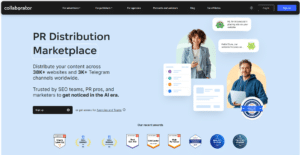
Managed services generally follow one of two models. Digital PR retainers bill for the work itself (research, content and outreach), because no honest agency can guarantee where a story will be published. Packaged link building sells a set number of placements on sites within a chosen authority range at a fixed price. Providers such as ClickIntelligence.com offer link building packages based on blogger outreach, a model that appeals to agencies and brands wanting predictable delivery across several clients or markets.
Editor’s note: Visualmodo has no commercial relationship with ClickIntelligence. We name it as one example of the packaged model so you can see what that kind of offer looks like, and the checklist below applies to it as much as to any other provider.
Whichever model you consider, hold every vendor to the same standards:
- Ask for live examples of recent placements and check those sites’ organic traffic, not just their Domain Rating.
- Read a few articles on each host site. If most posts exist to carry a sponsor’s link, the link carries little weight and some risk.
- Ask how paid placements are labeled. Google expects paid links to carry a
rel="sponsored"orrel="nofollow"attribute, so paying for links that pass ranking credit puts the risk on your site, not the vendor’s. - Refuse exact-match keyword anchors on every placement and insist on natural, varied wording.
- Expect reports on relevance and referral traffic, not only link counts.
We go deeper into separating earned links from bought ones in our guide to building a modern link building strategy that aligns with Google’s expectations.
Off-Page Tactics That Can Backfire
Knowing what to avoid is just as important. Google’s spam policies on link spam cover links created mainly to manipulate rankings, and sites that violate those policies can rank lower or drop out of results entirely. The most common traps for growing websites are:
- Buying or selling links that pass ranking credit, including sponsored guest posts published without a
rel="sponsored"attribute. - Private blog networks (PBNs) and sites that exist only to sell outbound links.
- Large-scale link exchanges and partner pages built purely for cross-linking.
- Keyword-rich anchor text in guest posts, press releases and widgets.
- Automated comment, forum and directory spam.
Branded anchors do not make a paid link safe, either. Google judges why a link exists, not how it is worded, as we explain in our breakdown of whether buying backlinks with your brand name is worth it.
If you inherited a messy backlink profile, do not panic and do not disavow everything. Google ignores most low-quality links on its own. The disavow tool is meant for cases where you, or an agency working for you, built a large number of artificial links that have caused or are likely to cause a manual action.
How to Measure Off-Page SEO Performance
A successful off-page strategy needs regular evaluation, but the right metrics are not always the obvious ones. Review these once a month:
| Metric | Where to find it | What progress looks like |
|---|---|---|
| New relevant referring domains | Google Search Console Links report, Ahrefs or Semrush | Steady growth from sites in your niche |
| Branded search impressions | Google Search Console, filtered to queries containing your brand | A gradual upward trend after PR and content pushes |
| Referral traffic and conversions | GA4 traffic acquisition report | Visitors from earned links who stay, read and convert |
| Brand mentions, linked and unlinked | Google Alerts, Ahrefs Alerts or social listening tools | More mentions on relevant sites with a positive or neutral tone |
| Reviews and average rating | Google Business Profile and industry review sites | A consistent flow of new reviews, all of them answered |
| AI answer visibility | AI visibility tracking platforms | Your brand cited for core topics in ChatGPT, Perplexity and AI Overviews |
AI visibility is the newest of these signals and the hardest to check by hand. Our comparison of the best AI visibility platforms covers tools that monitor how often answer engines mention your brand and which sources they cite.
Ignore metrics that reward volume for its own sake. Total backlink count, a third-party authority score on its own or the number of links delivered in a month tell you very little about whether people and search engines trust your site more than they did last quarter.
A 90-Day Off-Page SEO Plan for Growing Websites
If you are starting from scratch or restarting after months of neglect, this sequence keeps the work focused. Think of it as an off-page SEO checklist with deadlines attached.
Days 1 to 15: Set a Baseline
- Export your referring domains from Google Search Console and your SEO tool, and note which pages attract the most links.
- Search your brand name in quotes and list every unlinked mention you find.
- Ask AI assistants your category’s core questions and note whether, and how, they mention you.
- Check your Google Business Profile and main directory listings for outdated or inconsistent details.
- Record branded search impressions and referral traffic as your starting point.
Days 16 to 45: Fix the Foundations
- Align your brand name, description and logo across every profile and directory.
- Reach out about the best unlinked mentions from your baseline list.
- Request listings on partner, supplier and integration pages.
- Ask recent happy customers for reviews.
Days 46 to 75: Create and Promote One Linkable Asset
- Pick a question your audience asks that nobody answers well with data or a practical tool.
- Build the asset: a survey, benchmark, calculator or template.
- Pitch it to 10 to 20 relevant writers, newsletters and podcast hosts with a personal note that explains why it helps their audience.
- Share it on your strongest social platform and in communities where it genuinely answers a question.
Days 76 to 90: Measure and Double Down
- Compare every metric against your baseline.
- Identify which channels produced relevant links, mentions, AI citations or referral traffic.
- Drop the tactics that produced nothing and plan the next quarter around what worked.
The Bottom Line on Off-Page SEO
Strong off-page SEO combines high-quality backlinks, content worth citing, consistent brand mentions, real reviews, an honest community presence and steady measurement. For growing websites, the approach that lasts is a patient one: earn trust in the places your audience already reads, skip the shortcuts that can undo months of work, and let each credible mention make the next one easier to win.
Start with the baseline this week. There is a good chance you will find a few unlinked mentions and partner pages you never claimed, and those are the fastest wins available.
AI Search, Brand Mentions, Social Signals and Disavow Files Explained
On-page SEO covers everything you control on your own pages, such as content, title tags, headings, internal links and page speed. Off-page SEO covers signals created elsewhere on the web, such as backlinks, brand mentions, reviews and media coverage. On-page work makes a page relevant, while off-page work shows that others trust it.
Yes, arguably more than before. AI answer engines summarize what trusted third-party sources say, so brands that are mentioned, reviewed and discussed across the web are more likely to appear in their answers. Links still matter for traditional rankings, while mentions increasingly matter for AI visibility.
Yes, indirectly. Unlinked mentions help search engines and AI systems associate your brand with a topic, and an Ahrefs study of 75,000 brands found branded web mentions had the strongest correlation with brand visibility in Google AI Overviews. They are also easy to turn into links by politely asking the author.
Not directly. Likes and shares are not a ranking factor. Social media supports off-page SEO by putting your content in front of writers, journalists and potential customers who may later link to you, mention you or search for your brand by name.
Usually not. Google ignores most spammy links automatically. Use the disavow tool only if you or someone working for you built a large number of artificial links, or if you received a manual action for unnatural links.
Quick wins such as reclaimed mentions, partner page links and new reviews can appear within weeks. Authority built through digital PR and linkable assets usually takes several months to move rankings, and the effect compounds over time.
Look for steady growth in relevant referring domains, rising branded search impressions in Google Search Console, referral visitors who engage and convert, more mentions on sites in your niche and your brand appearing in AI answers for your core topics.